A year has passed since I took up running. I discussed my reasons back in February. I started with a typical “Couch to 5k” plan last November. The only thing it asked of me on that first day last winter was to run 60 seconds at a stretch, then give my self another 90 seconds to recover by walking. Easy! Except that it wasn’t.
As simple as that sounds it wore me out. I remember being exhausted, out of breath, and coughing on the second day. I was on the trail for half an hour but only spent 8 minutes running. And it was hard.
But I stuck with it. Progress was rapid, almost amazingly so. Three months later I finished my first 5k run. Six weeks after that I finished a 5k at a 10 minute mile pace. In July I ran the 10k race at Midnight Madness in Ames. Progressing from 5k to 10k was nearly as difficult as getting from 0 to 5k was.
But after completing that 10k I worried about stopping. I know others who did their planned 5k or 10k runs, called it good, and stopped. I didn’t want to join that club; I’m in this for my health and fitness for the long term.
But without a firm goal I tend to coast. After the 10k I spent a couple months running but I didn’t feel I was improving. So here is my next challenge: I am training for a half marathon in the spring. I started this training in early October, and plan to race in March. The training started light and slow, mostly working on endurance, but now I’m starting some speed work with interval training. I’m taking a few days off because I hurt something in my foot, but I plan to be back on the trail soon. I have a long time to get ready for the race, but I’m still nervous and I think it will still be difficult.
That’s my progress so far. In one year I went from being exhausted nearly to the point of falling over after a short run to training for a half-marathon. I went from 25 miles a month of total distance to a high of over 90 miles in August. Since then I’ve pulled back on the total distance, with shorter weekday runs and longer Sunday runs, but as I get closer to the race in March that distance should go up. All told I have traveled over 500 miles on the trails in one year I have been running. While each run doesn’t seem like a lot they add up to a huge achievement.
I haven’t written in a while, so I thought I’d give a general update of what I’ve done so far this fall. I traveled far more often than usual in the last two months, and wrote less often than I intended.
South Carolina
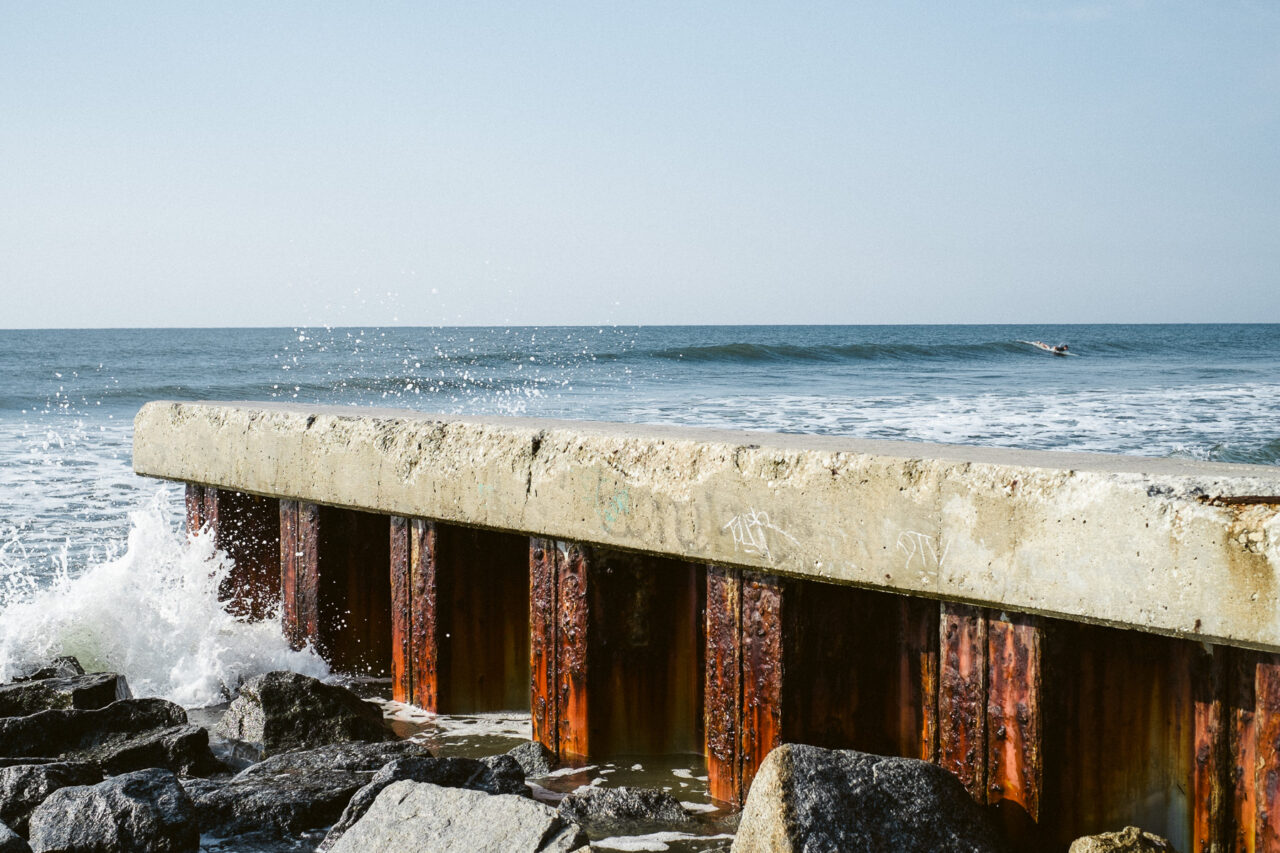
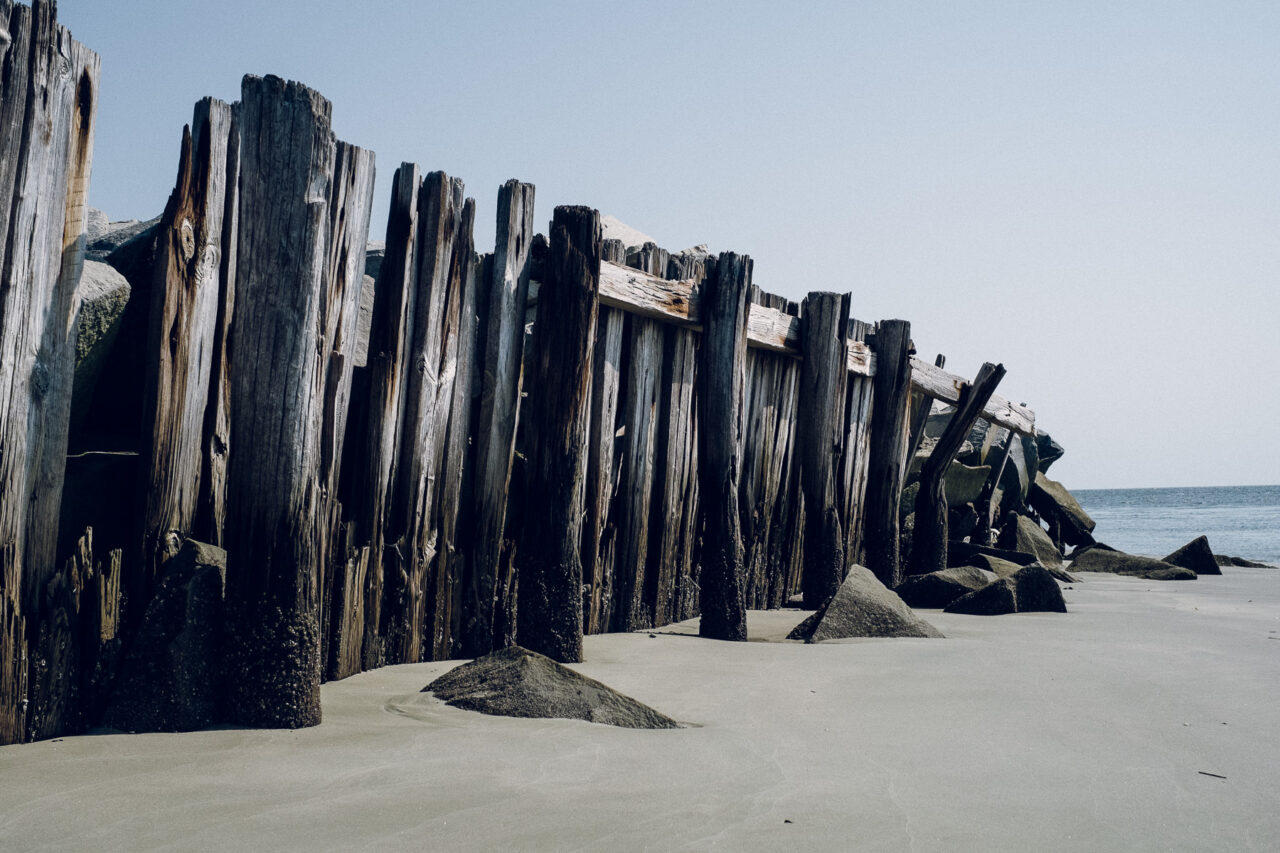
Although technically still summer, I’m going to count our post Labor Day vacation. I joined my entire family, some for more time and some for less, on a beach vacation in South Carolina. We rented a large house on Folly Beach with some friends, and spent a week exploring the sand, the water, and the historic city of Charleston.
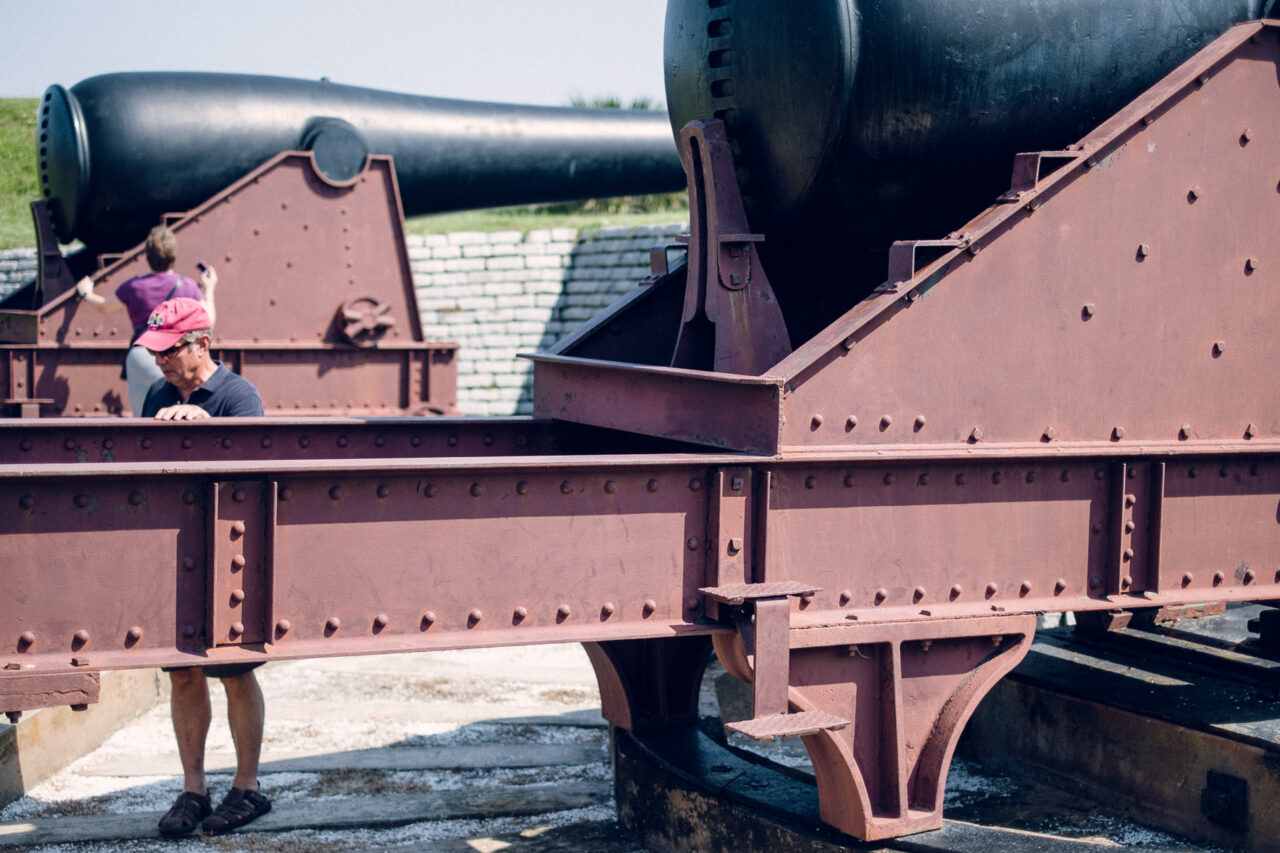
During the trip we spent time on the beach, visited Fort Moultrie, saw downtown Charleston several times, explored areas that were destroyed by Hurricane Hugo before my Dad’s first trip that have since been rebuilt, ate and drank at several restaurants, and a bunch of other things. We even made a delicious home cooked meal of fresh grilled fish, farmers’ market vegetables, and shrimp.
I don’t take many real vacations, and this was my first in years. It was fantastic, and I even bought a fancy new hat to celebrate.
Portland (round 1)
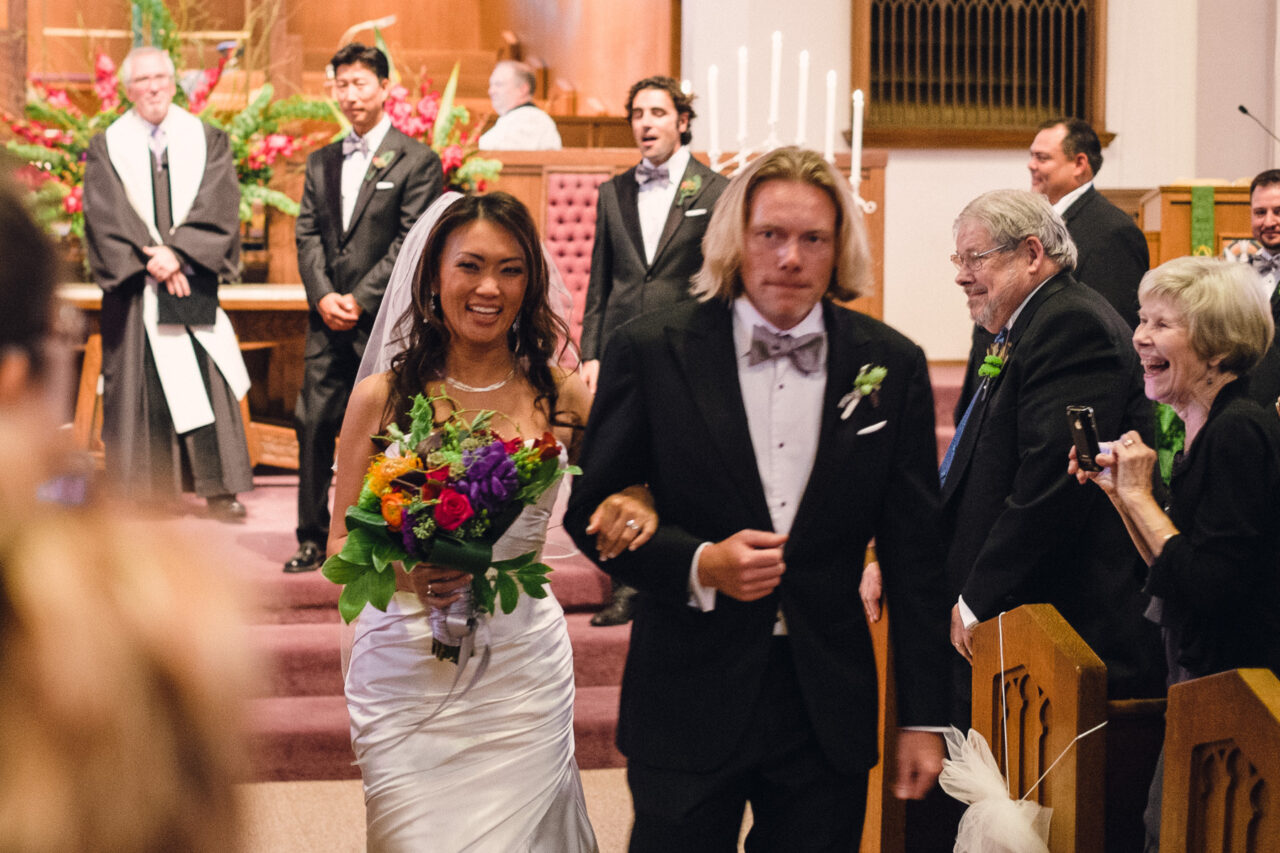
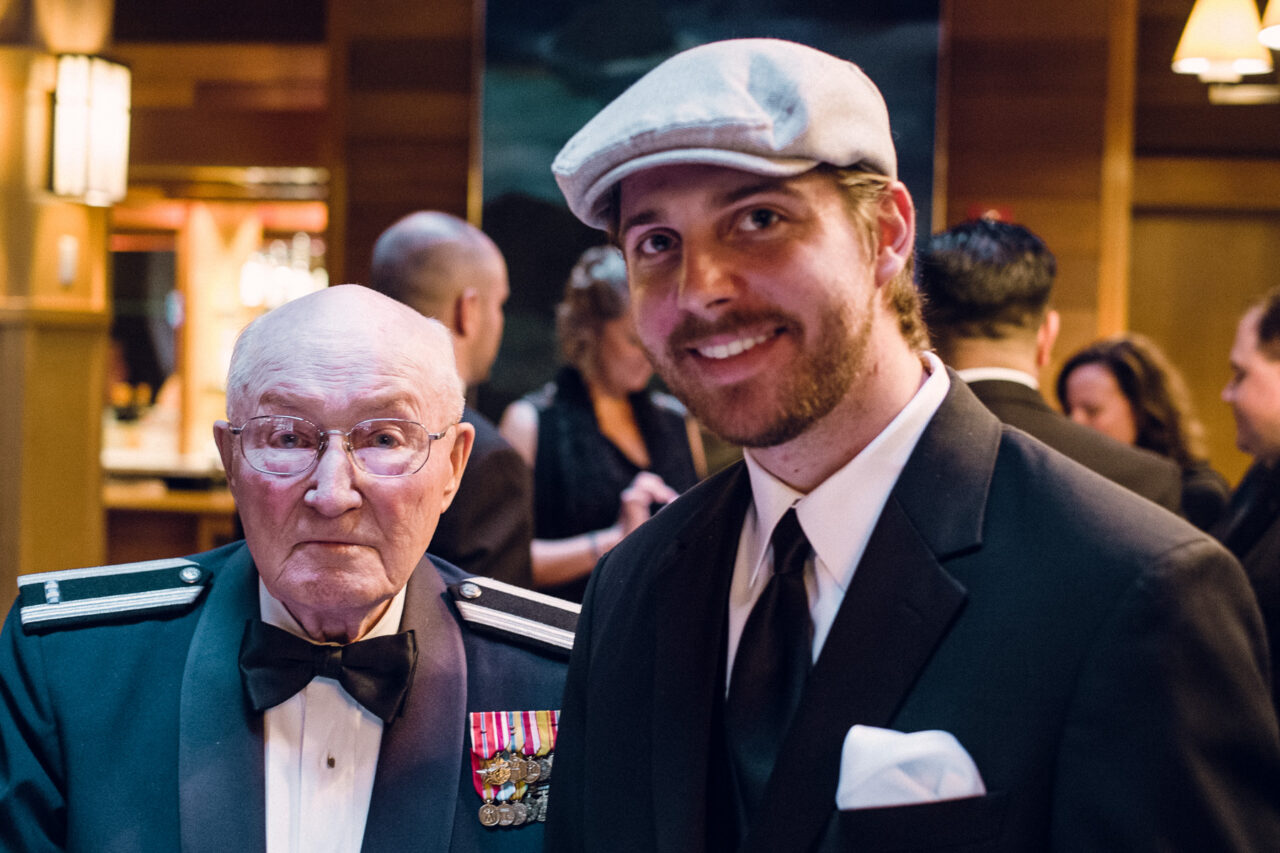
I got home from vacation on the 11th, and the next weekend I turned around and flew out to Portland for my friend Hilary’s wedding. I’ve known Hilary for years, but before her wedding had never met her husband. They started dating just before the last time I went to Portland, and I hadn’t had a chance to head back there since.
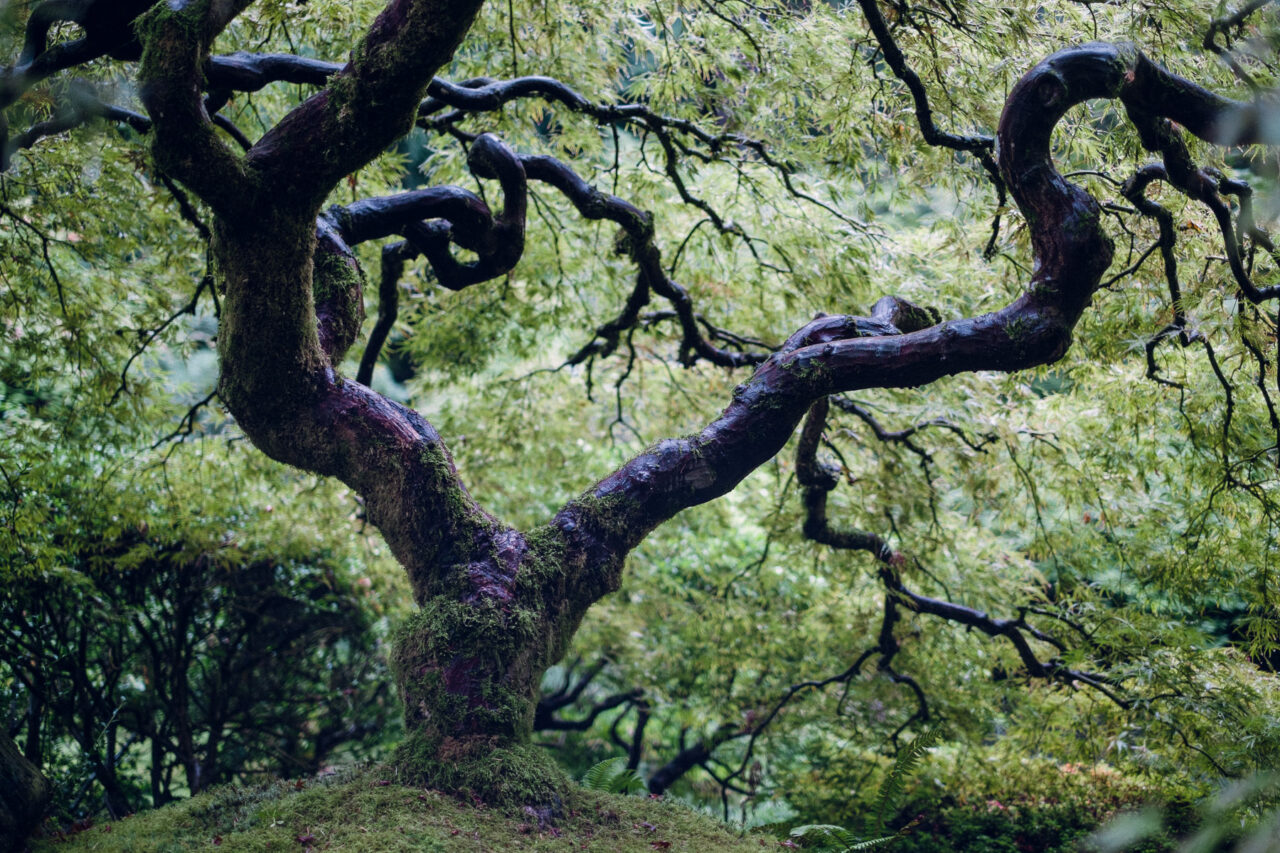
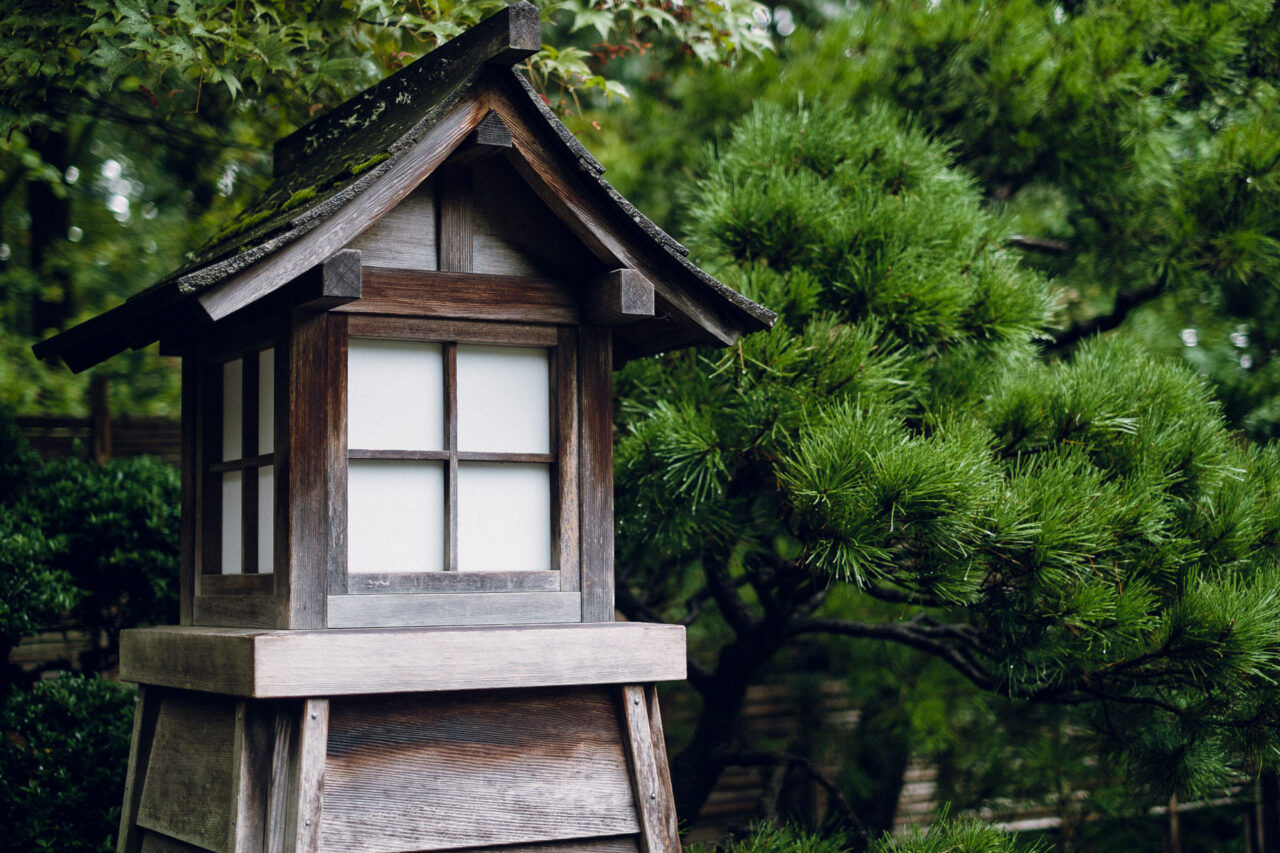
After the wedding Michael and I took Sunday afternoon to explore the Japanese Garden tucked into the hills of Portland. It was raining but still beautiful. Another Flicker photo set awaits.
Beerpig 2013
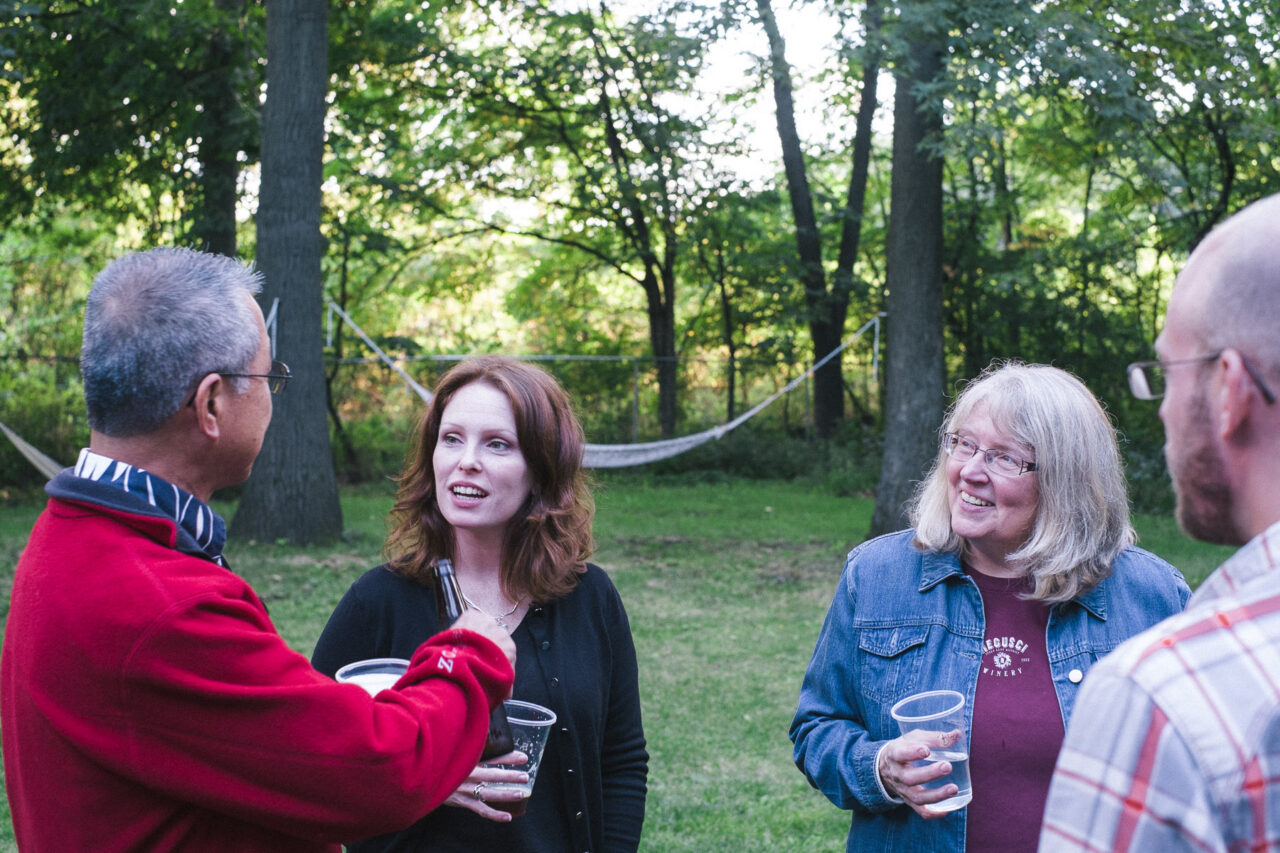
The very next weekend I turned around again and flew to Des Moines for the second annual Beerpig celebration at Andy’s house. Beerpig is a celebration of pork and beer, and this year featured homebrew from me, Ben, and Andy, along with amazing pork, lovely salad, and incredible cornbread.
I got my beer home by stuffing an entire case of homebrew into a box and putting that in my duffel bag to carry home. I was just under the 50 pound weight limit, and didn’t have to pay anything extra. Shipping beer by plane is totally OK, but just in case the unlabeled bottles worried anyone I even wrote a nice note to the TSA inspectors describing the beers which they never read.
I stayed with Andy and Lindsey (and little Nico) through the weekend. My parents came to the party, which was a little weird because several of my worlds then collided.
If you guessed I’d have another Flickr link, you’re right.
TAGTOBER 2013
I traveled less in October than September. We started up another round of our bi-annual photo contest/project called TAGTOBER, where we try to take a picture every day during October and put it up to share, to comment on, and to vote on our favorites.
2 years ago we didn’t have a formal site, and so I did this as a personal project. This year we got pretty good participation. I missed one day last week because I was in Portland and 11 pm rolled by before I realized it. Otherwise I have done pretty well. It’s hard to find something artistic every day with work and life orbiting around you.
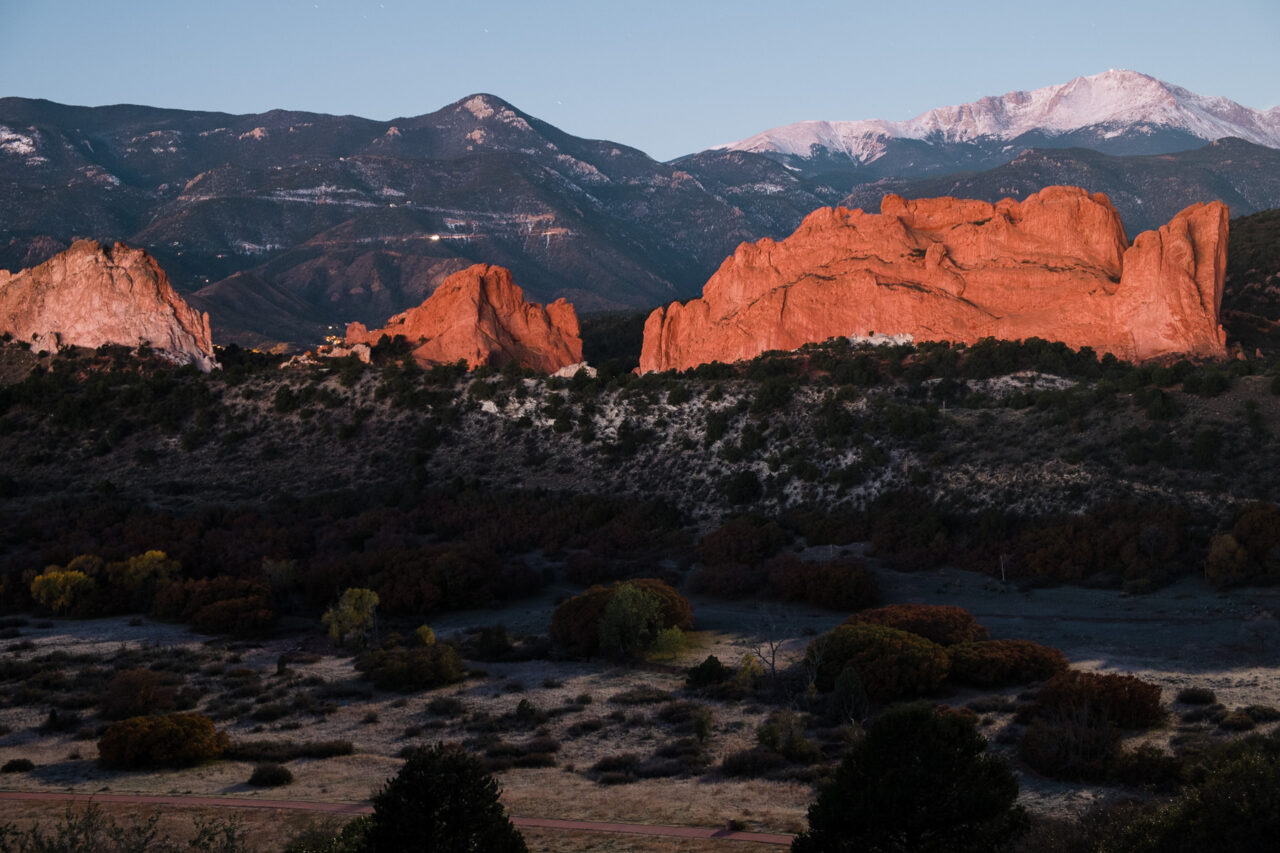
Colorado Springs is only an hour away, but somehow I never find the time to go down there. I don’t know why, but even though it is close it feels far. But I wanted to take pictures of the rocks in the sunrise for this year’s TAGTOBER contest. My friend John lives in the Springs, and I met him a little after 6 am on an overlook above the Garden of the Gods park.
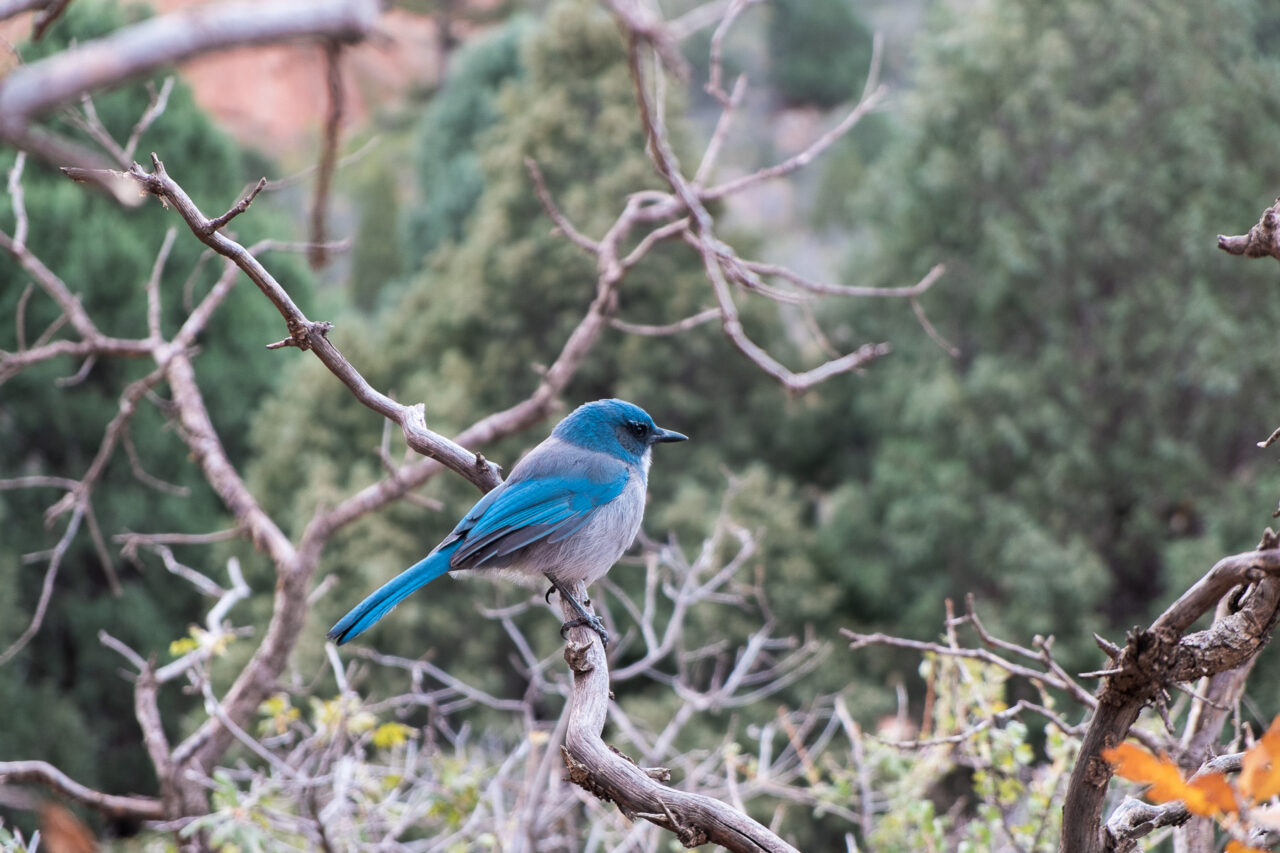
I love John, and don’t get to see him often enough. We both had our cameras out, and watched the sun rise together. After that we headed into the park for a little more photography and hiking. The morning sun on the rocks was amazing, and we met a number of small birds including some lovely blue birds. I put yet another set of photos up on Flickr.
Portland (round 2)
Within a month of the wedding I found myself back in Portland last week. I was supporting a client on some project work and took the opportunity to stay the weekend and see Hilary again. This time I got the chance to spend some time with Albert and get to know him a little better.
He’s something of an odd fellow, but seems generous and fun. We attended an 80s music video dance party, had a nice dinner, and visited a few local breweries. The weather in Portland was foggy in the mornings but pleasant overall. Saturday was cool and sunny, and I explored the waterfront and the Saturday market. Both were excellent places for people watching.
What’s next?
Now I’m back home and October is ending. I’m planning for more adventure to wrap up the year, including time with my cousins and uncle in about a week, followed by a weekend trip to the Twin Cities to see Ben and Sam. I’m still trying to decide if I can make it back to Iowa for Thanksgiving. I’d like to, but plane tickets are pricey and I’m debating the drive instead.
I may have more work travel as well, though it’s not all planned yet. I will probably be in Las Vegas for a meeting in December. After that it’s Christmas, and the year’s end.
Last month I took a Friday off and drove up to Rocky Mountain National Park. I wanted to get out of town for the day and I hadn’t been up in the mountains in quite a while. I also had a rented Zeiss lens that I wanted to spend more time with, and in a place both prettier and more interesting than my neighborhood.
I took a whole mess of pictures, but most of them aren’t very exciting. Still, I was glad to spend the day outside, and even spent a good half hour sitting by a rock on a hillside just kind of taking things in.
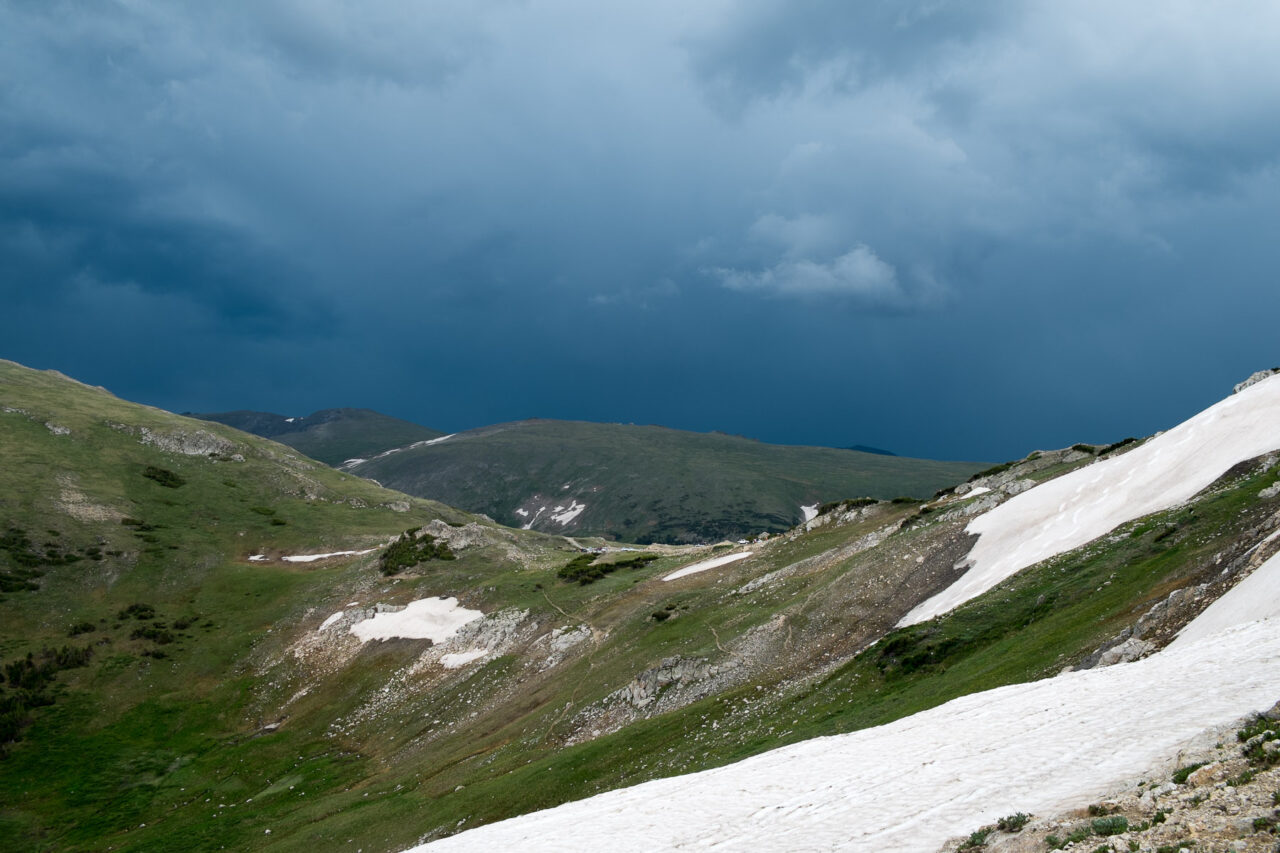
It was July 4th weekend, but there was still some snow in the shadier areas at the peak.
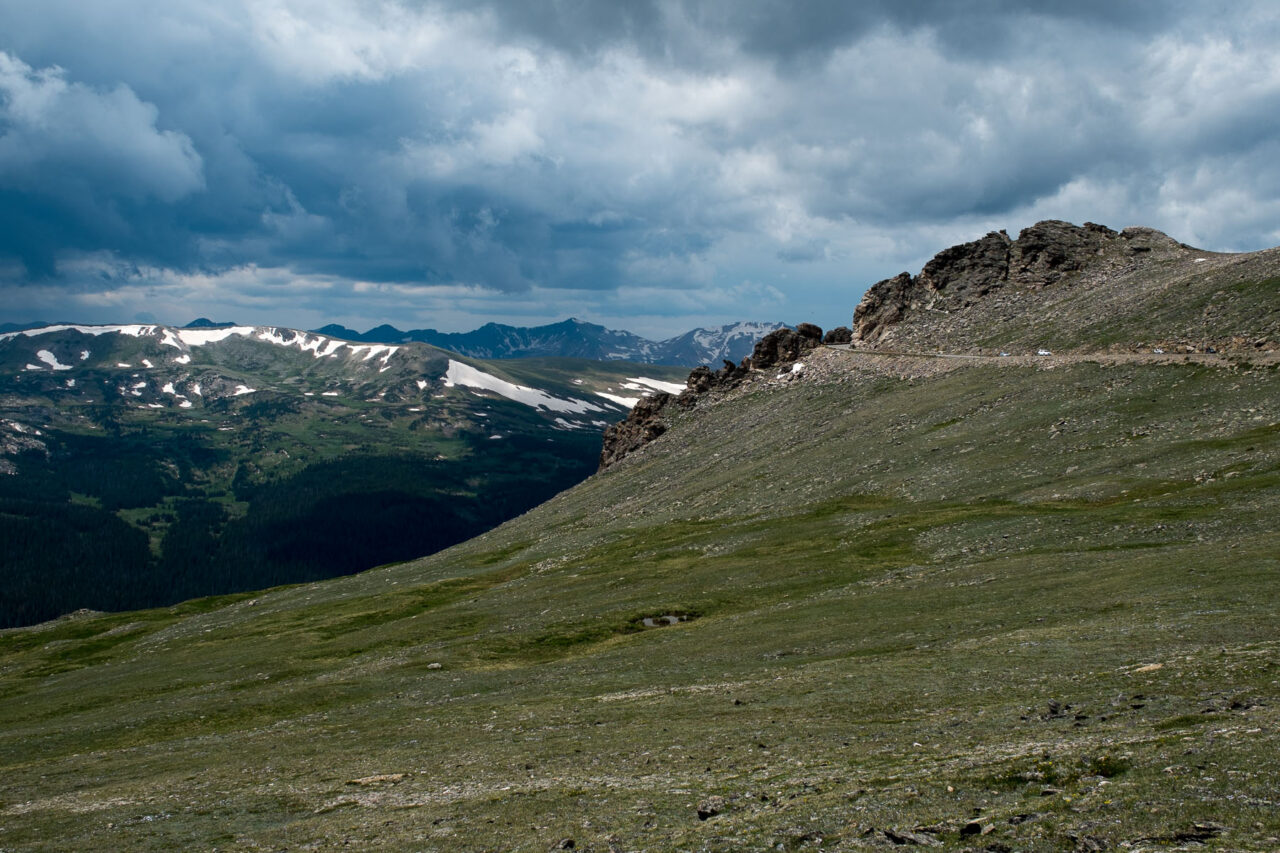
There’s a great view from the road over the pass, which is only open in the summer.
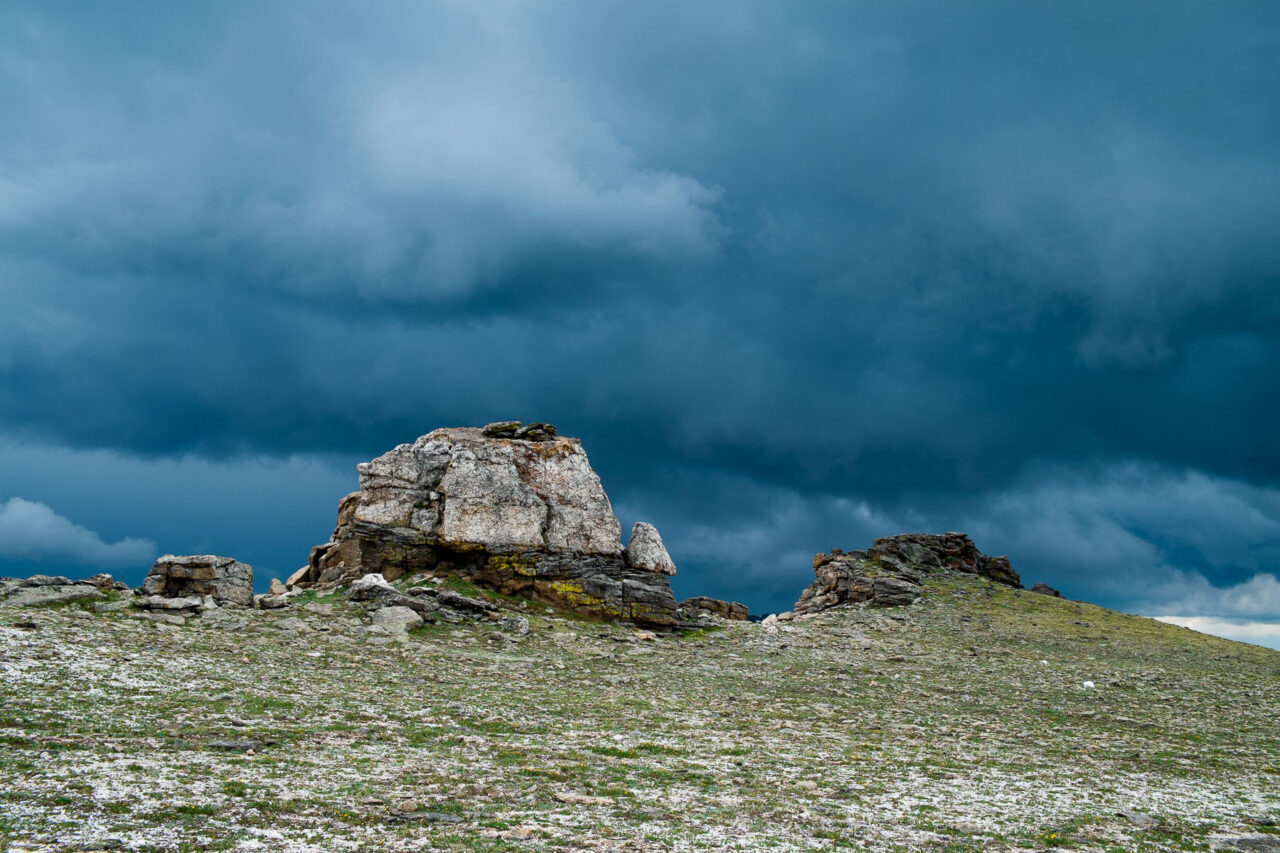
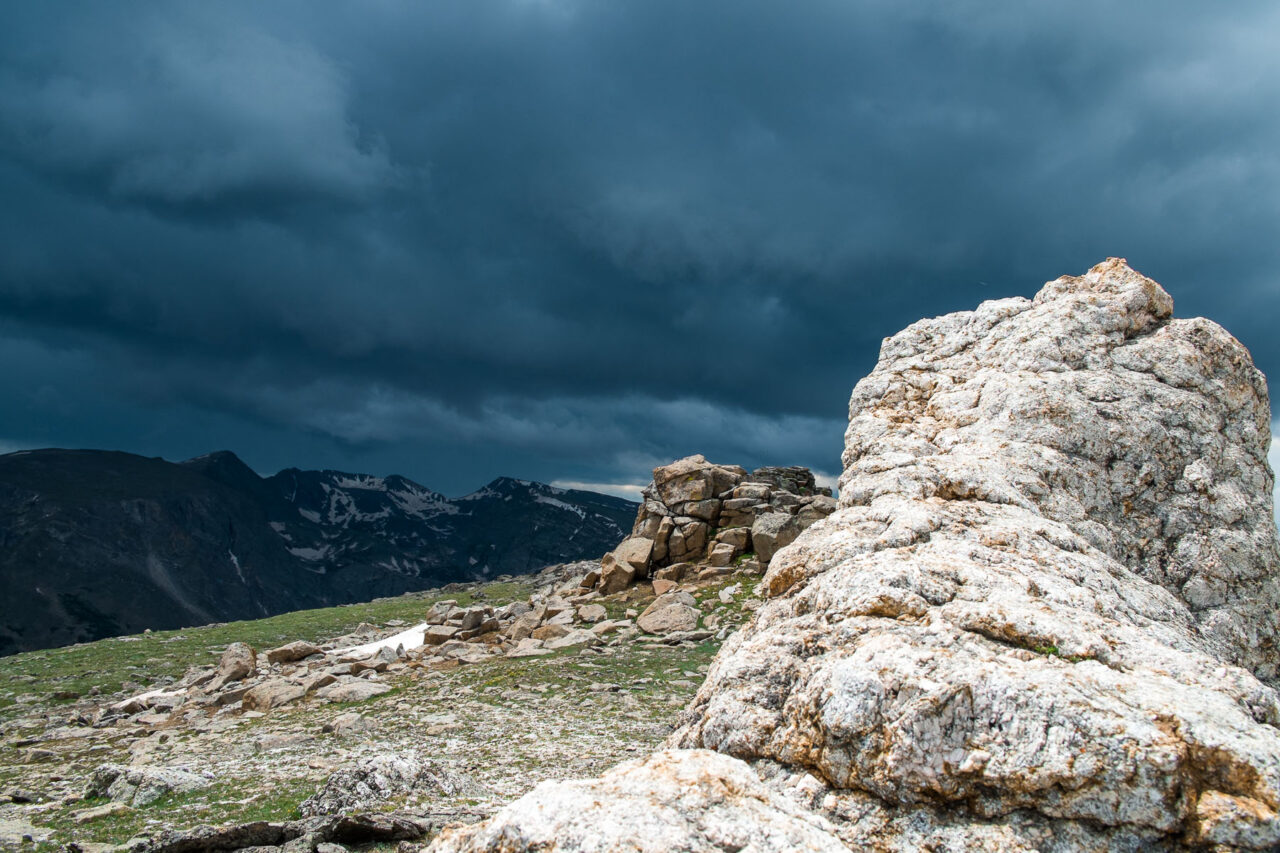
A black looking thunderstorm came through in the early afternoon. I came down from a high place earlier than I wanted to, as I was worried about lightning. The storm ending up going past without incident. It made for a nice contrast with the rocks for the short time the sun was still out.
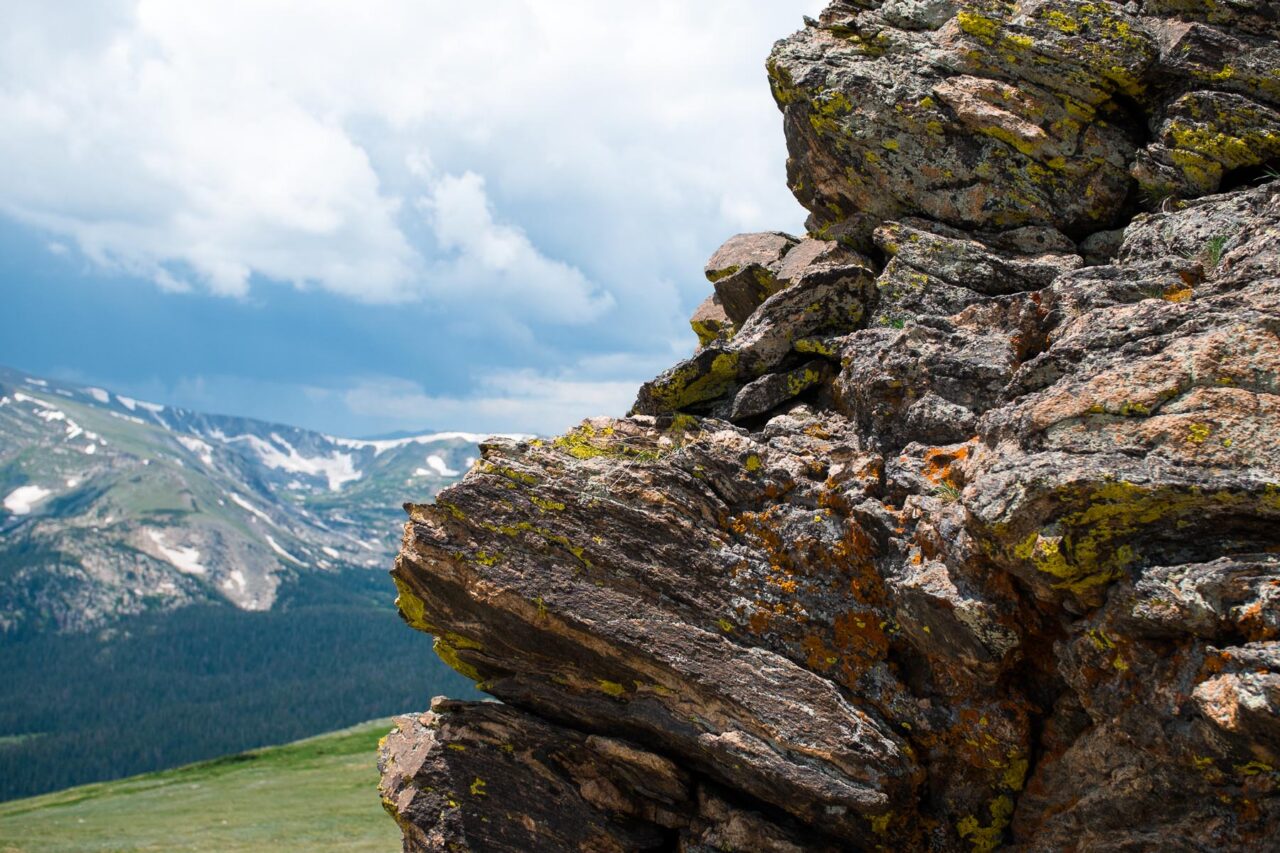
Not long after we got the sun again, and I thought some of the lichen on the rocks was pretty.
It’s been over a month. About time I shared these. The drive out to the park can be kind of frustrating, but it has always been worth it.
Yes this is another post about beer. I’d apologize but I really enjoy brewing and I like sharing my hobby with others.
I have two brewing things to cover today: an update on my SMaSH best bitter and a new batch of old ale I hope will be ready for the Christmas holiday.
SMaSH update
I wrote the last post at bottling time. I had tasted a sample before bottling but was still in the “hopeful” stage of the batch. It typically takes two to three weeks for a bottle conditioned beer to fully carbonate, but I am always impatient. I started trying bottles before a full week was up.
The first bottle was undercarbonated, and while it generally tasted OK there was noticeable diacetyl. Ben had experienced a similar effect on a few of his brews but this was my first experience with it. I was a little worried but Ben had explained that it went away over time. The next few bottles improved slowly but surely, and by two full weeks into the process it was essentially gone. Good news!
The end result is one of my favorite beers to date. I worried that the extreme simplicity of the recipe would lead to a result with no complexity. But in fact the simple ingredients and low alcohol simply made a nice beer that actually showcases the inherent complexity in the ingredients and process. It’s a very different result than I got with my overly complicated pale ale. That batch is quite drinkable, but is confused and muddied. This batch is pleasing and lovely.
Old Ale
So my simple English bitter turned out well and I have almost two cases left. Along with that I have a case of my farmhouse ale and another case of pale ale. That seems like plenty of beer to be getting on with.
But of course I still want to brew. This seemed like an ideal time to make a strong beer that is meant to age. Last year I made a fairly strong, sweet Porter for the winter and it was a really excellent idea. Another strong beer like that seemed perfect. I could brew in August and have several months to condition a batch before the holidays.
The style of choice this year is an old ale. I won’t be able to age it for a year or more like some have described, but that’s OK. I based the general recipe on Dry Dock’s HMS Bounty Old Ale with my own changes and substitutions as always. Like the rest of my recipes this is something of an experiment. I used an English yeast I am not familiar with and a new type of hops. I honestly don’t know what this will end up tasting like in a few months. But I am excited to find out.
The brew day was completely uneventful and I came close to my recipe targets for color and original gravity. The beer has been fermenting for about 5 days now and has already slowed down considerably. I’m going to hold off checking how things are going until at least a full week has passed. I doubt I’ll have issues with stuck fermentation but I’ll check to be sure.
I started running last winter, and shortly after the new year I got serious about calorie counting again. For a while I was up and down, especially in March when I spent the whole month either sick or traveling. But since April I have been very serious about things, even if I am not perfect in the day to day.
It can be hard to see the progress while it is happening. I don’t feel particularly fit nor that I am all that much thinner. Progress is little by little, and what stands out most is the day to day fluctuations on the scale. Longer time periods are fuzzy. I need external signals to help highlight the changes.
As an example I went on a run tonight. I ran a little more than four miles. Two of those miles were relatively slow, and two were relatively fast. It felt hard, and I felt like maybe it should have been easier. But if I go back and look at my progression over time, it’s obvious just how far I have come. If I just think back to my first 5k in February it’s clear how different things are.
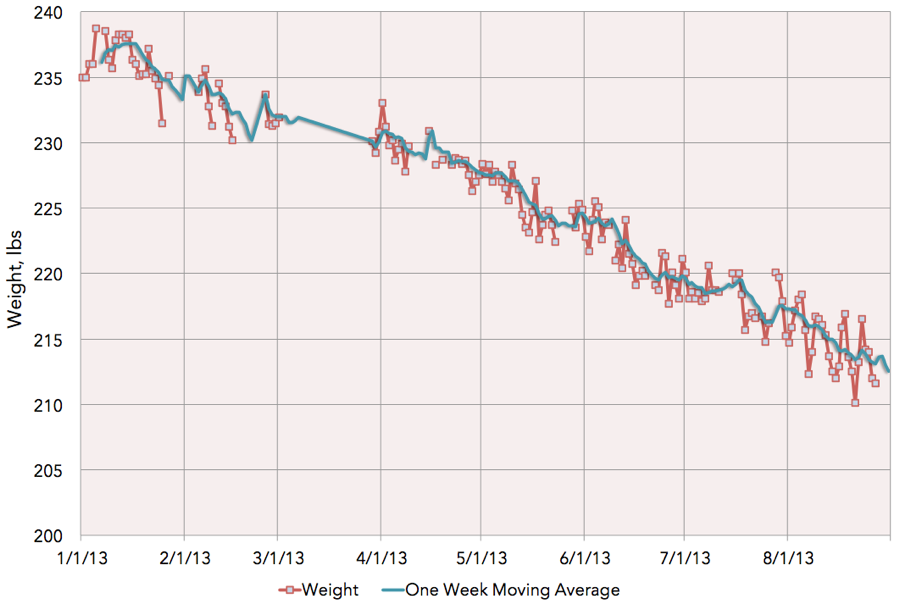
It’s the same with my weight. I don’t feel particularly different or thinner than before. But when I chart the data over a longer period the change is both obvious and steady. Everything is going fine. And today I wore a shirt that hasn’t fit in years and it was perfect. I don’t see it, but it’s there.
Here’s my progress so far.
I still have a long ways to go. The last time I tried this I made it to about 200 and stalled. And I later lost all that progress. This time I have to do better. I know I can. It’s just a matter of motivation and dedication.
I have noticed a recent trend of brewing beer using a very simple set of ingredients. The extreme end of this is what is called SMaSH, Single Malt, Single Hop. These beers really try to explore the individual characteristics of the chosen malt and hop variety. This type of beer restricts what the brewer can do within the total range of possibilities, but restriction in materials often can bring other types of creativity.
I was introduced to this idea by Scott Witsoe up at Wit’s End Brewing, and it led me to some reading and exploring on the internet. After I finished my relatively complex American pale ale something this simple was a very attractive idea, and I chose to create a SMaSH recipe for my next brew.
I wanted to explore a traditional style using traditional ingredients, but with a restricted palette. After brief consideration, I chose a British Best Bitter as my recipe type. Crisp Maris Otter or Simpson Golden Promise were the obvious choices for malt, and East Kent Goldings or Fuggles the obvious choices for hops. I’ve created several excellent brews using Maris Otter as the base, making it the choice for me. I selected Goldings for hops, basically on a coin flip. I spent a lot more time thinking about what yeast to use, as there are dozens of choices of English yeast available. Eventually I settled on the Fullers ESB yeast, as it has lovely characteristics and results in a very clear finished beer.
A Best Bitter is intended to be a session beer; good flavor but not very strong, a beer you can sit and have a few of without much danger. My original target was a flavorful beer with less than 4% alcohol. When I brewed though I ended up with better mash efficiency than planned, and so the final beer is estimated to be about 4.3%. Still quite a bit lower than my recent pale ales.
My system is actually not very well suited for a 5 gallon low-gravity batch. My mash tun, which is great for brewing a strong beer, is a little too large for a low gravity ale. It works fine, but it can be hard to establish a good grain bed for filtration, since it is only a couple of inches deep. The large air space above the grain can also lead to more rapid temperature loss in the mash. A strong beer like my farmhouse ale needs much more grain and helps with both of those things.
I wanted a relatively high finishing gravity for more body and malt flavor, so I targeted a mash at the higher end of the temperature range. I also chose a less attenuative yeast for the same reasons. The beer was bottled yesterday, and my measurements show that this worked out quite well. The taste of the warm, uncarbonated beer at bottling time gives me great hope for success. I’ll know for sure in 2 or 3 weeks.
The recipe:
This recipe was tuned for my simple brewing system where I can get a 75% mash efficiency consistently. Since I got 80% efficiency in the actual mash I was actually slightly higher than my recipe target. I used a single infusion mash at 154F to extract more unfermentable sugars for more body.
As I have posted before I started running last November and have managed to turn it into a habit. From 3 days a week I’ve pushed to 4, and have been steadily improving both my speed and distance.
My first 5k was back in February, and then I did several more. None were official: I was timing myself based on my phone’s GPS. Eventually I was able to do a 5k run at a 10 minute pace, one of my major goals. In my post discussing this, I concluded that it was time to enter some official events and get some official times.
In May I signed up for the 10k run at the annual Midnight Madness road race in Ames. I was going to do the 5k, and made the choice for the longer run at the last minute. I felt like I needed a new goal to keep training and improving, and a 10k seemed properly ambitious.
From there it was time to train, a lot. When I signed up for the race my longest run was under 4 miles. Shortly into training I failed to reach 4 miles more than once. But in the 2 months I had I slowed down a little and steadily increased my distance to 4, then 5, then 6 miles.
By a few weeks before the race I was running at least a 5k four times a week, and thinking of a day where I “only” had to run 3-4 miles as an easy day. What a huge change from when a 3 mile run was a distant, difficult goal!
Eventually I ran a 10k in training, about 3 weeks before the race. I did it in 67 minutes, and felt like I had enough to go slightly faster. I set a personal goal of running the race in under 65 minutes, breaking the 10:30 pace barrier for over 6 continuous miles.
That was my goal, and although I was nervous I was sure I could do it if I just pushed on. It helped that I had so much support from family and friends, and that my mom, older sister, younger sister, sister’s boyfriend, Ben, and Sam were all running too. It wasn’t just me out there, it was an event filled with family and friends.
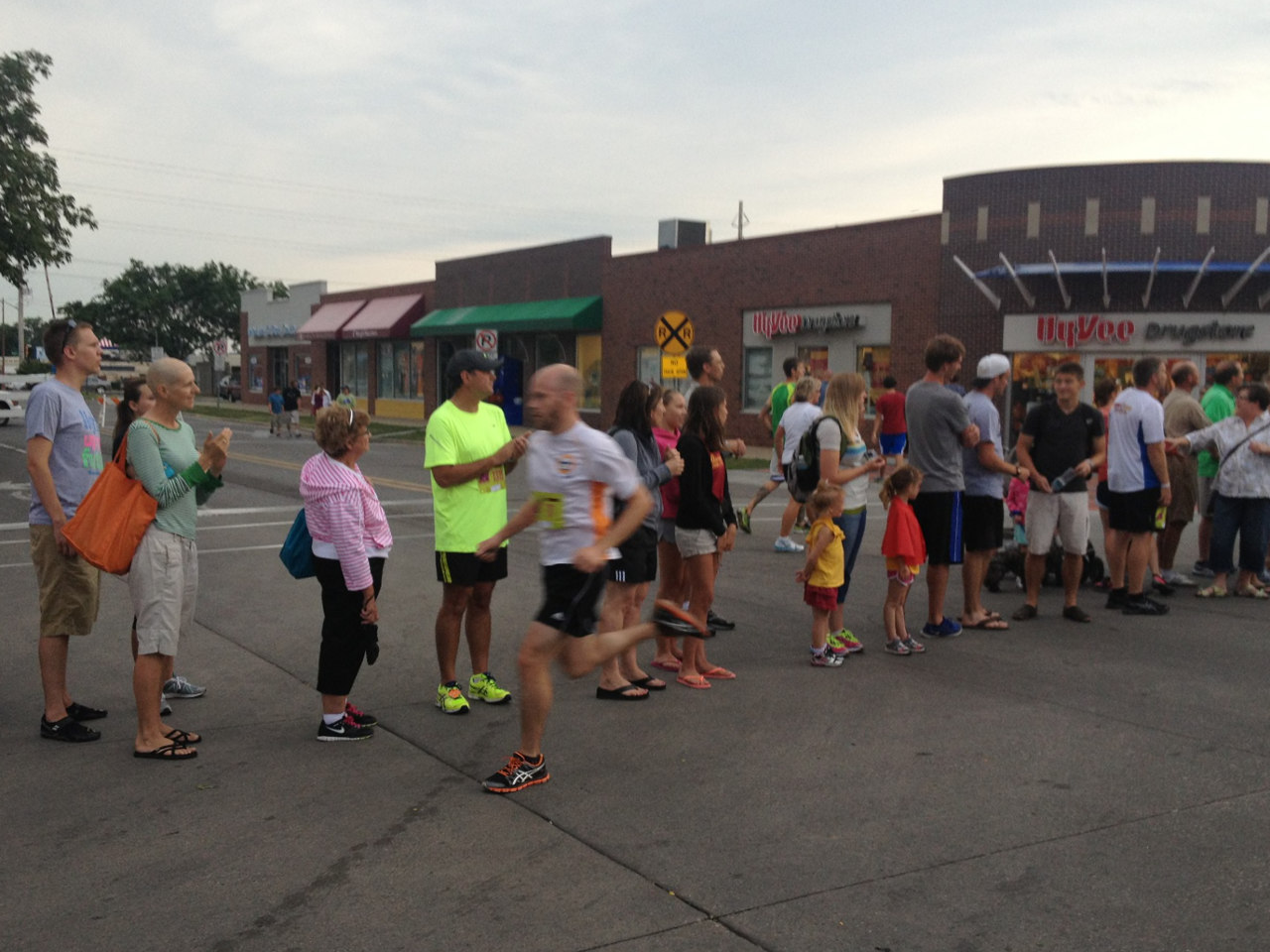
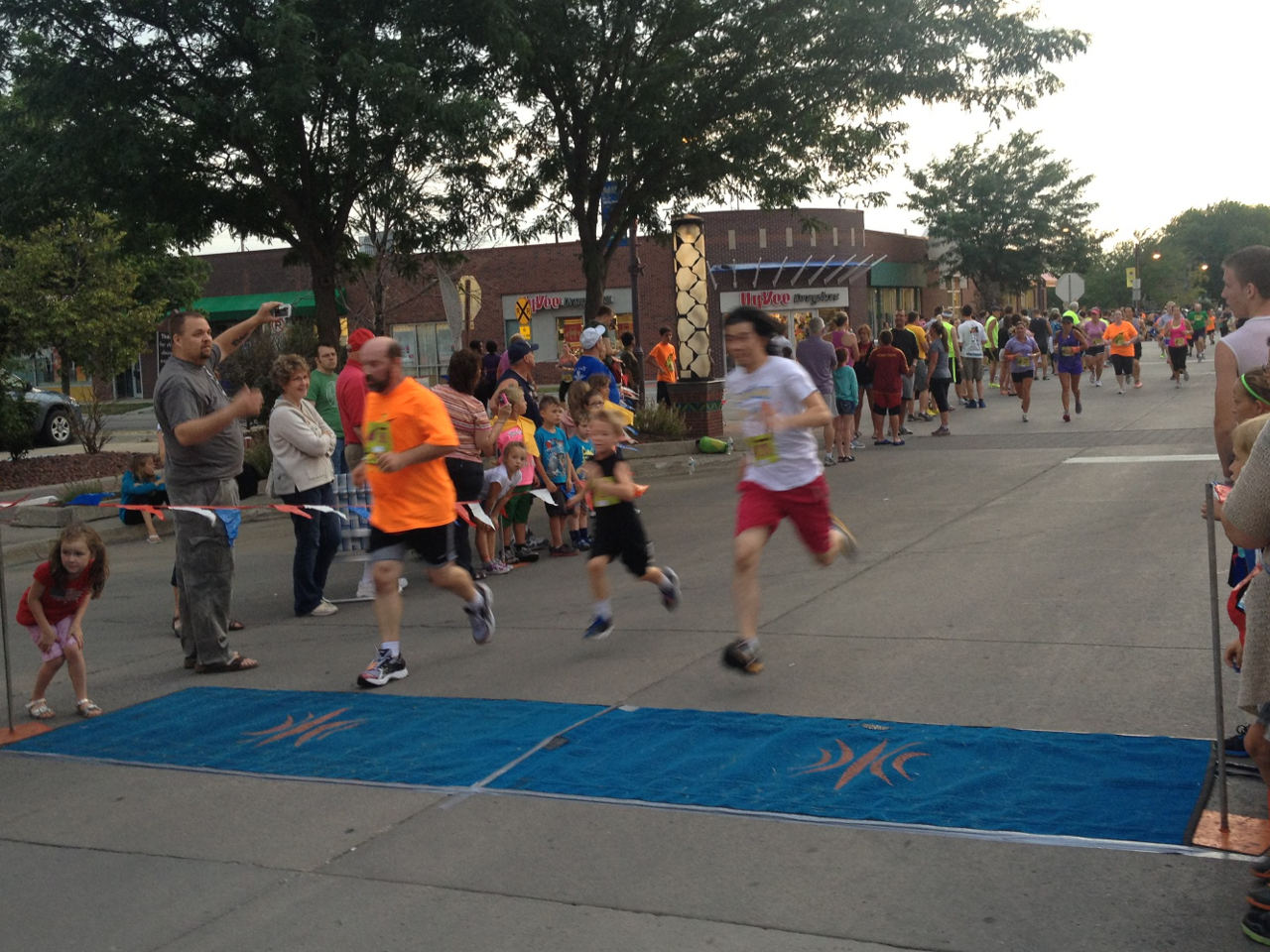
On the night of the race I watched the 5k, cheering on my friends and family with my dad and little sister. I watched Ben and Sam cross the finish line of the 5k, though they were blurry streaks on my camera.
Shortly after I found my way to the 10k starting line, standing with my little sister and her boyfriend on one side. I was nervous, but her enthusiasm helped tamp that down. Sam was there too, but I missed Ben.
Then the gun went off. We all started running, and with one last squeeze of her hand I watched my little sister take off with her boy to run a much faster race. Within a mile I dropped from the middle of the group to farther back, but in my headphones the pace coach I had set up said I was doing fine. I was a little ahead of my target time.
The Midnight Madness 10k is two loops of a 5k circuit, and shortly before the halfway point the fastest runners were passing me on their way to 30 minute times. Meanwhile I was building a slight lead on my personal target, just in case.
When I got to the last turnaround, at the 5 mile mark, my pace coach tried to get me to speed up, to go from a 10:25 mile to a 10 minute mile. I managed for a while, but the long uphill was too much. I was losing ground. Soon I was closer to an 11 minute mile, and feeling tired. At the top of the hill I was 30 seconds down on the last mile’s time, and losing all the margin I had built early in the run.
We came over the last bridge, and I could see the finish line. On the left were two of my closest friends cheering me on. On the right was my family, cheering just as loud. I could hear the announcer calling out times. 63 minutes. I was almost a quarter mile away.
I pushed hard, as hard as I could with what I had left. 64 minutes. I heard my friend Beth’s name called out. I kept running. Crossed the line.
Then my name. Then 65 minutes.
I had done it! I ran a timed 10k! I beat my target time! I didn’t stop to walk!
The official times were posted the next day. Confirmation.
261 32 M30 Steve Block, 33, Denver, CO 1:04:51 10:26
I was near the back, 261st out of 277 men, and 32nd out of 35 men in my age group. But I don’t care. I set a goal, trained hard to meet it, and then did it.
I find it hard to get off my butt to make an adventure happen. But often it only takes a little push from a friend to overcome my inertia.
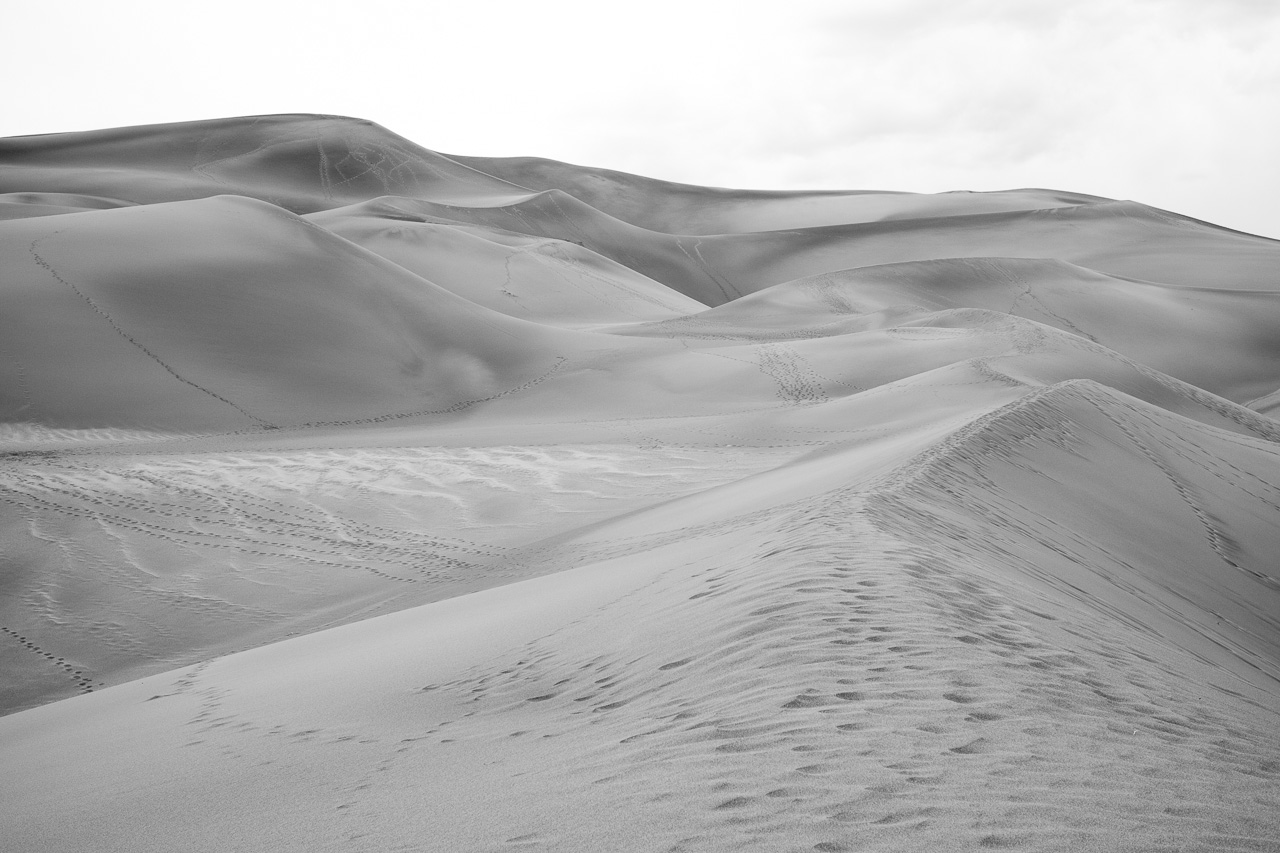
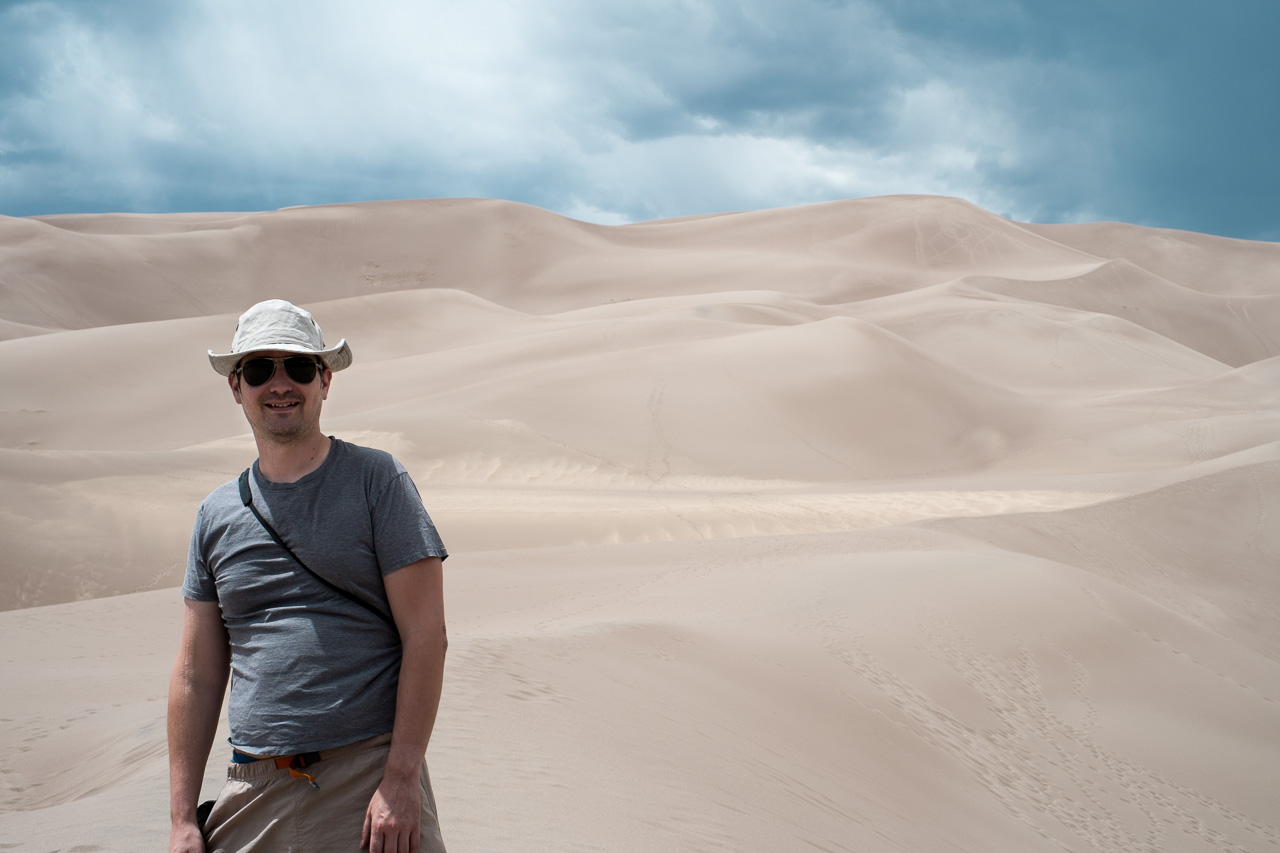
Alex’s visit provided just that push. He and Danielle spent a week in Denver, and planned to head to the Great Sand Dunes park to camp overnight before heading on to Utah to start their vacation. They invited me along, and although I initially hesitated, I couldn’t argue with the appeal of the dunes and the logic of going there with a good friend.
I’ve lived in Colorado for 6 years, but hadn’t been out to the Great Sand Dunes since my college trip with Robert and Liz. A long time, and the Sand Dunes are less than a 4 hour drive away.
I drove south from Denver on Saturday morning, and met Alex and Danielle at the Oasis store just outside the entrance to the park. The main camping area was full, and so they had found a spot at a campsite a few miles up the Medano Pass Primitive Road. They came down to pick me up, since the road requires a high clearance 4×4 to get through. The Focus would never make it.
The weather looked threatening, and Danielle decided to hike up to the campsite to put the rain fly up on their tent. Alex and I decided to hike out onto the dunes instead.
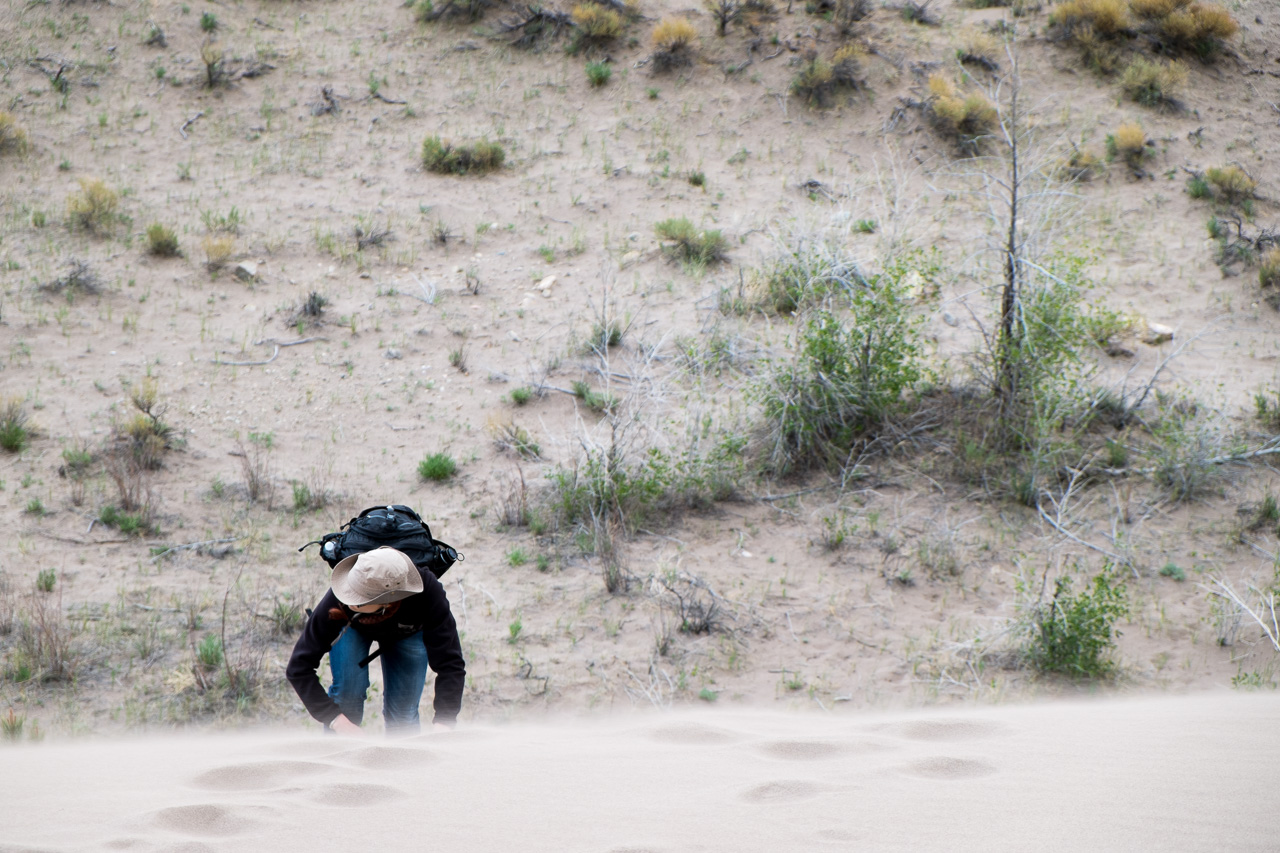
Danielle never made it to the camp site, at least not on foot. The sand on the road is soft and it was over 5 miles back to the site. Alex eventually got permission from a ranger to drive up to our campsite, along with a stern warning to not go any farther. I left the Focus down in one of the parking lots, with a permit from the rangers for overnight parking, and rode in the Jeep with Alex towards the campsite. We picked up Danielle on the way, just short of the river crossing and at least a mile from the site.
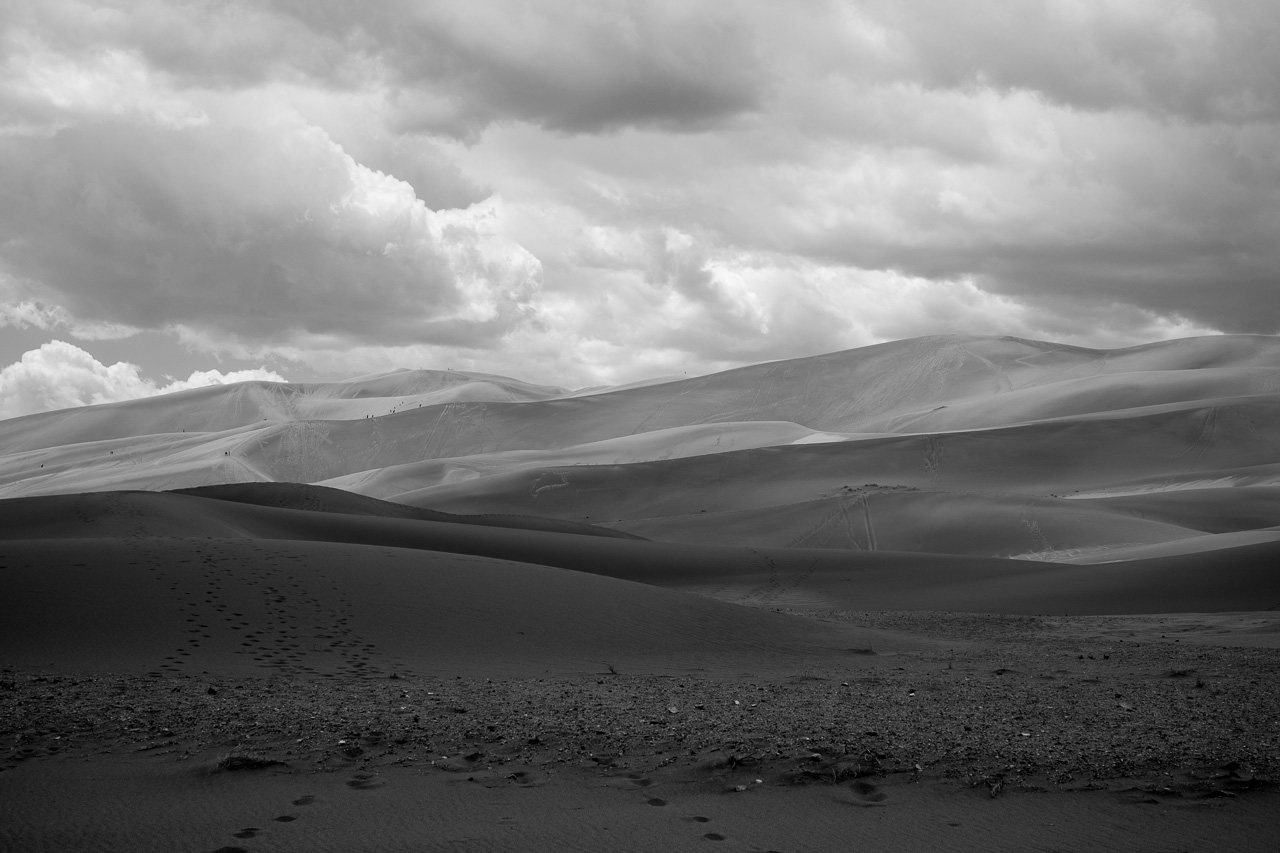
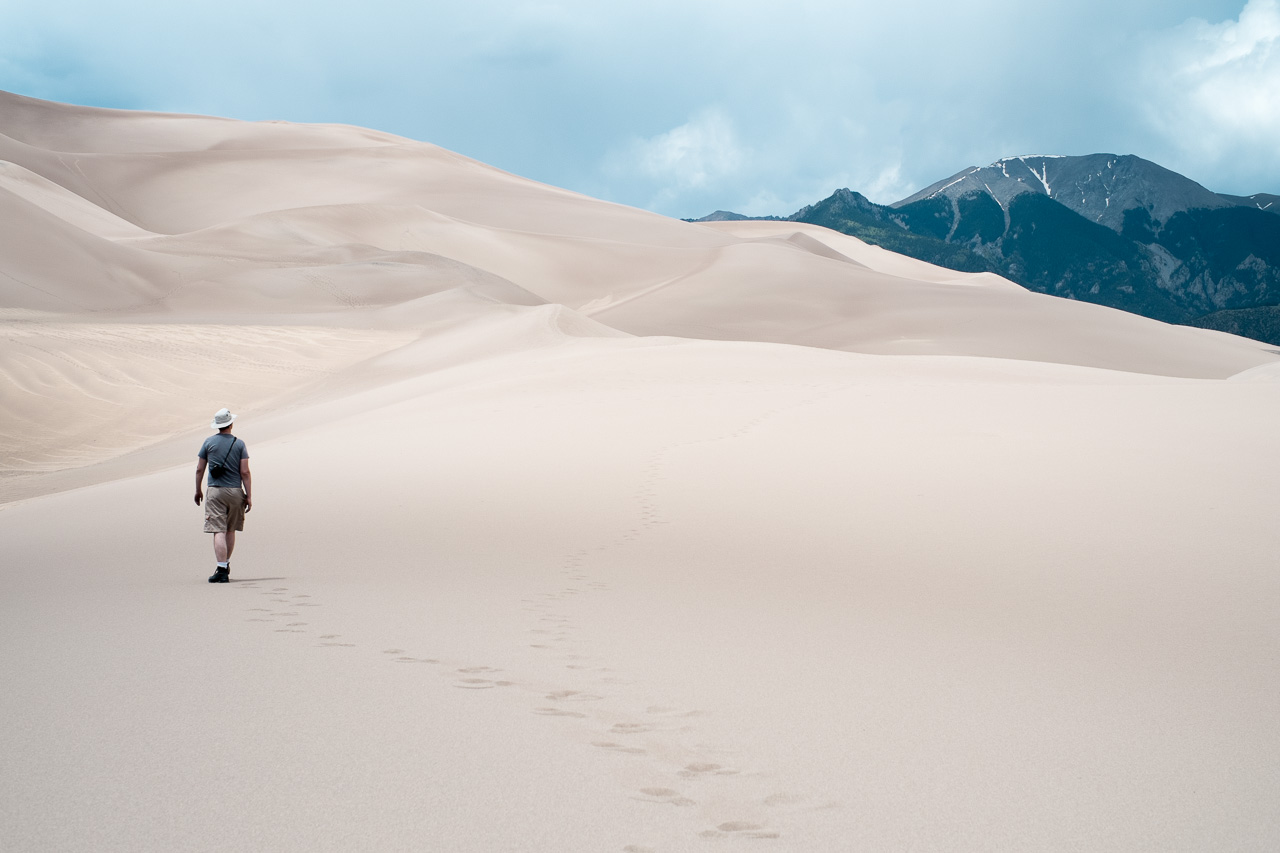
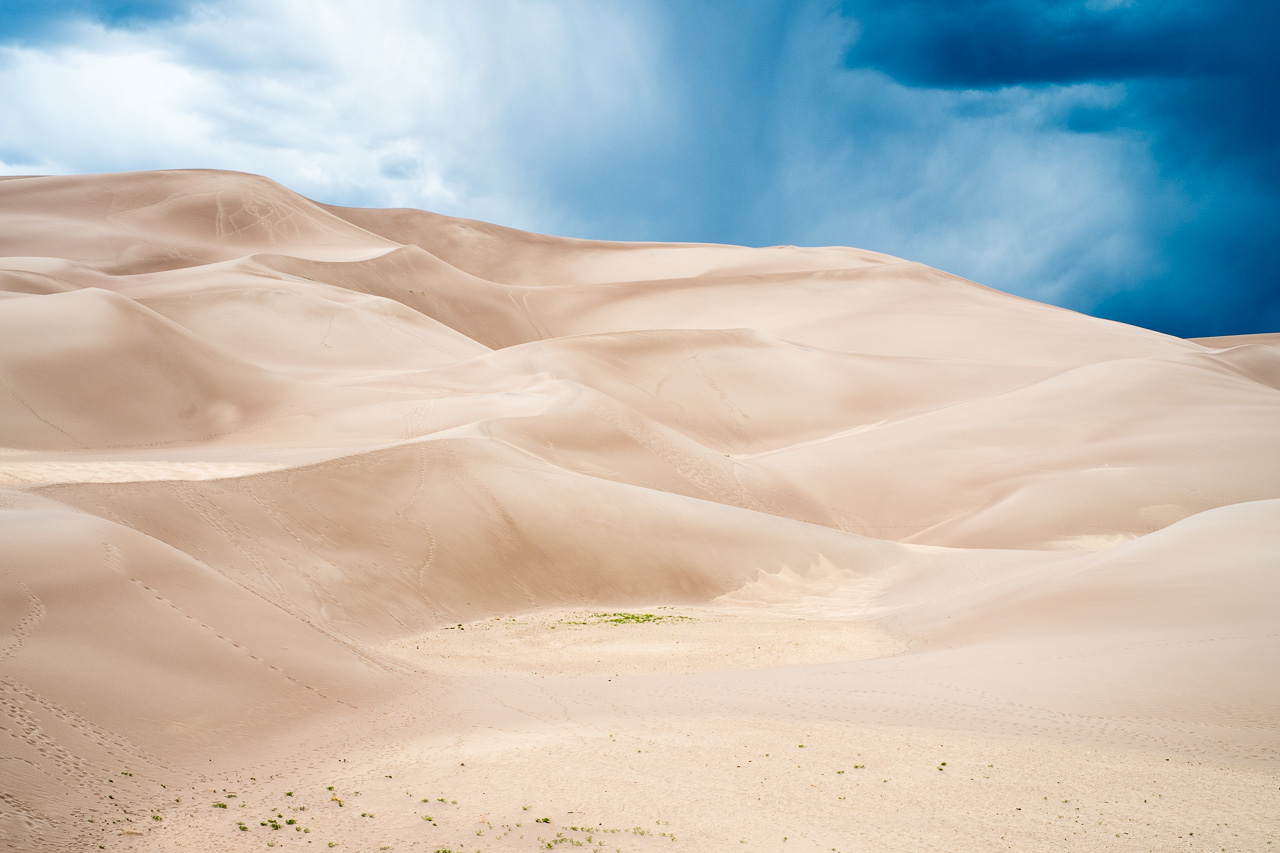
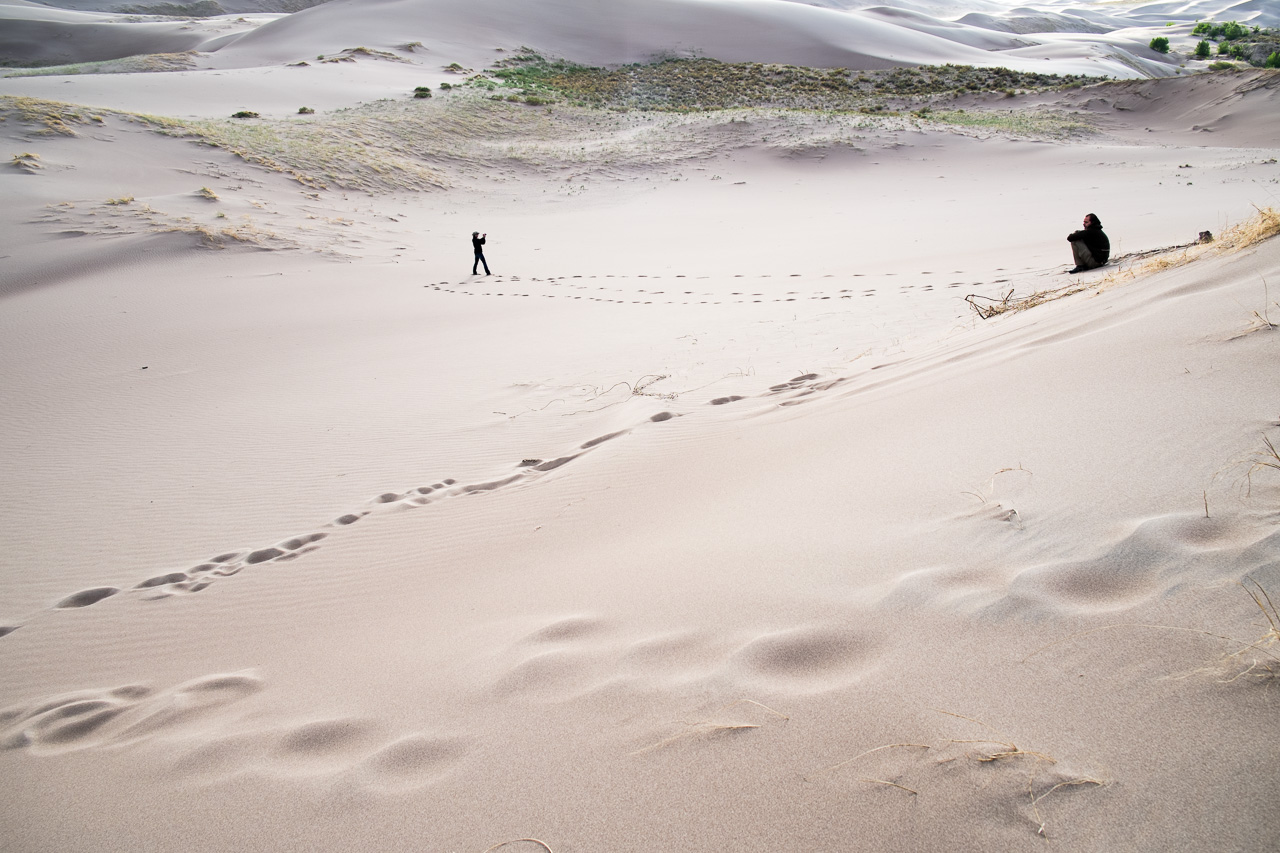
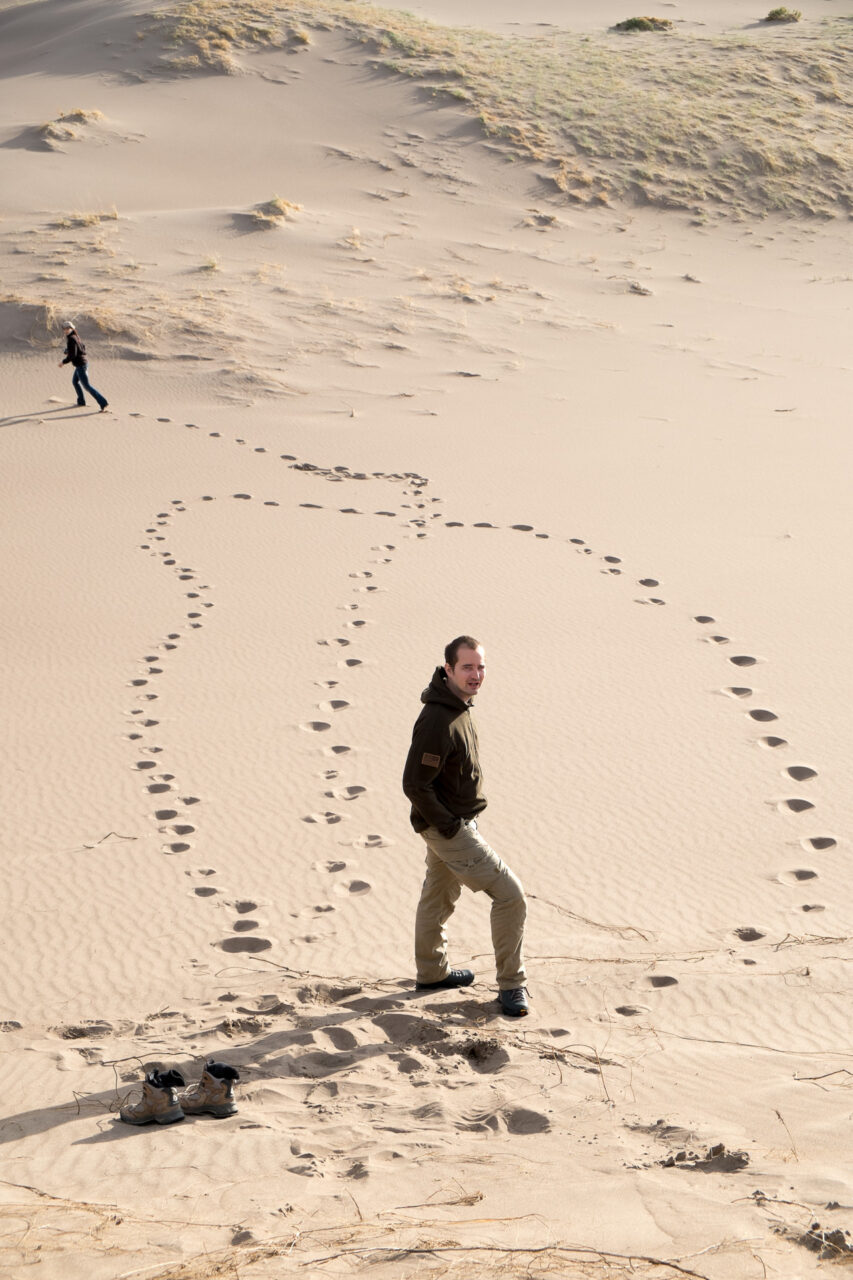
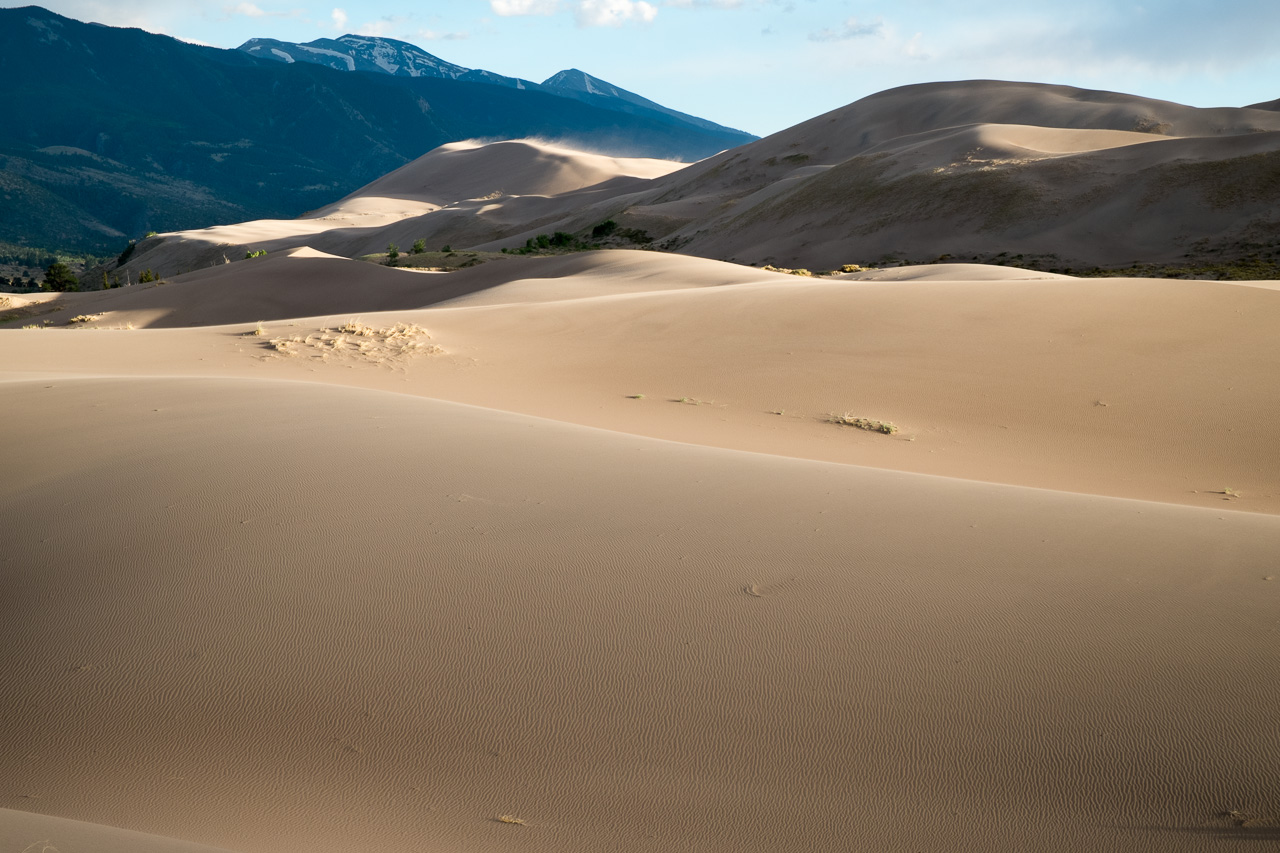
Later in the evening we walked about a mile down the road and then hiked up into the back side of the dunes. There were a few steep climbs up soft sand, but we made it. Unlike the main dunes area it was completely empty. We had the dunes to ourselves.
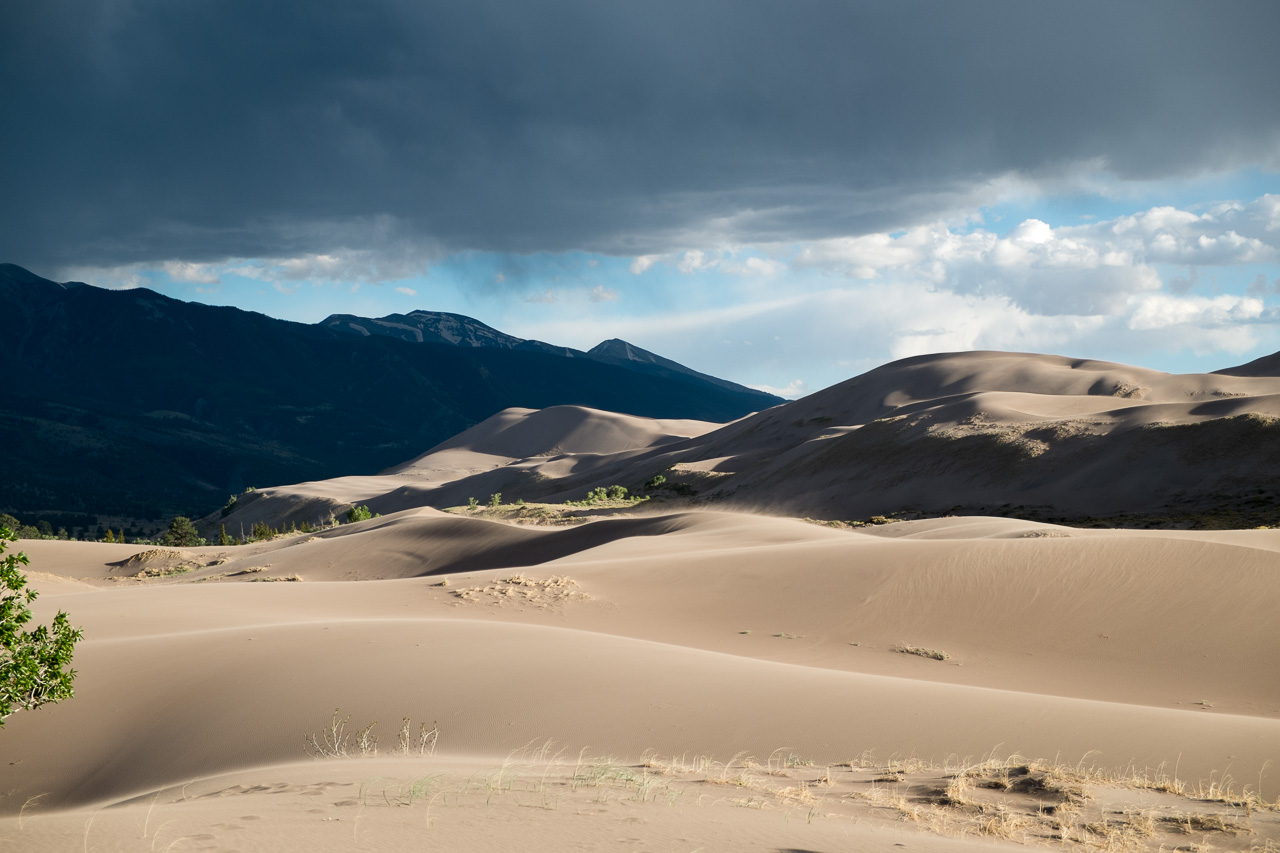
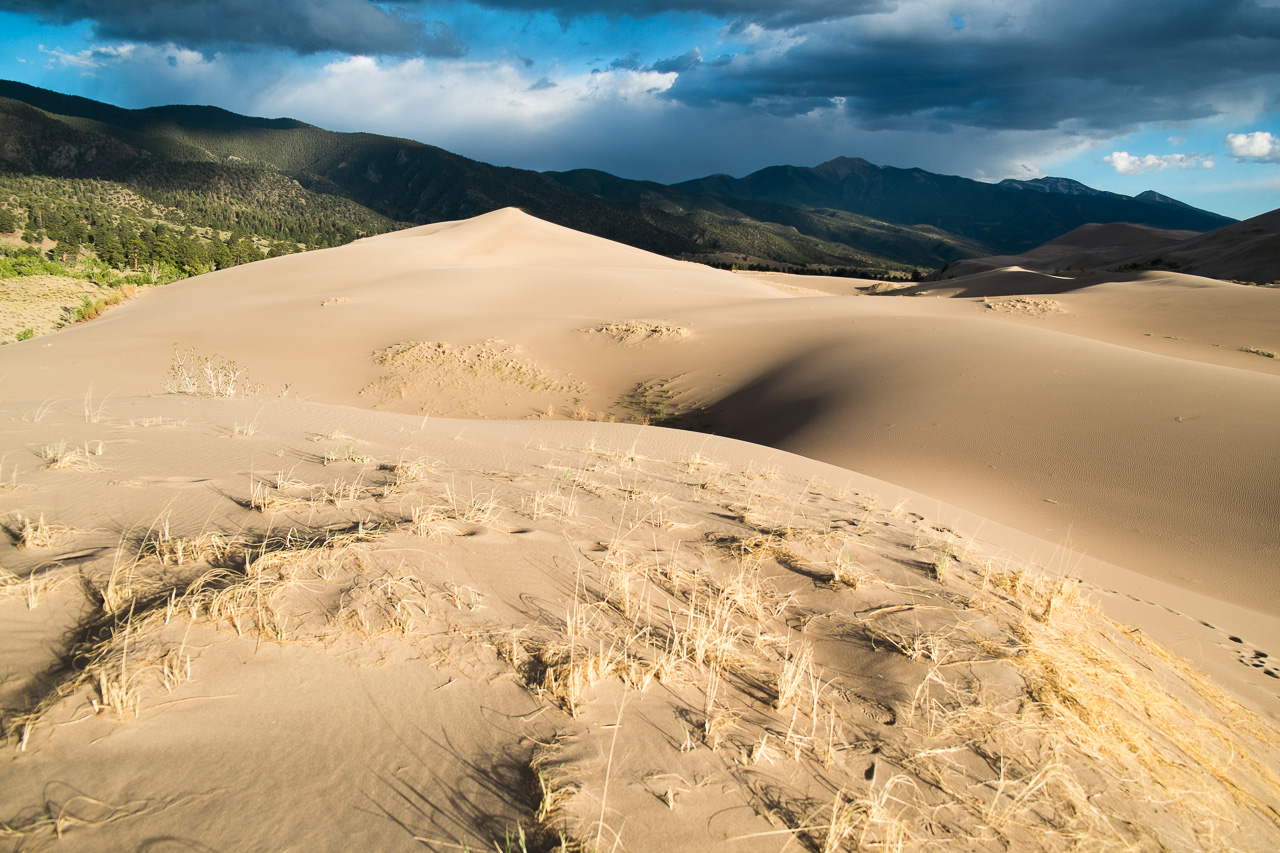
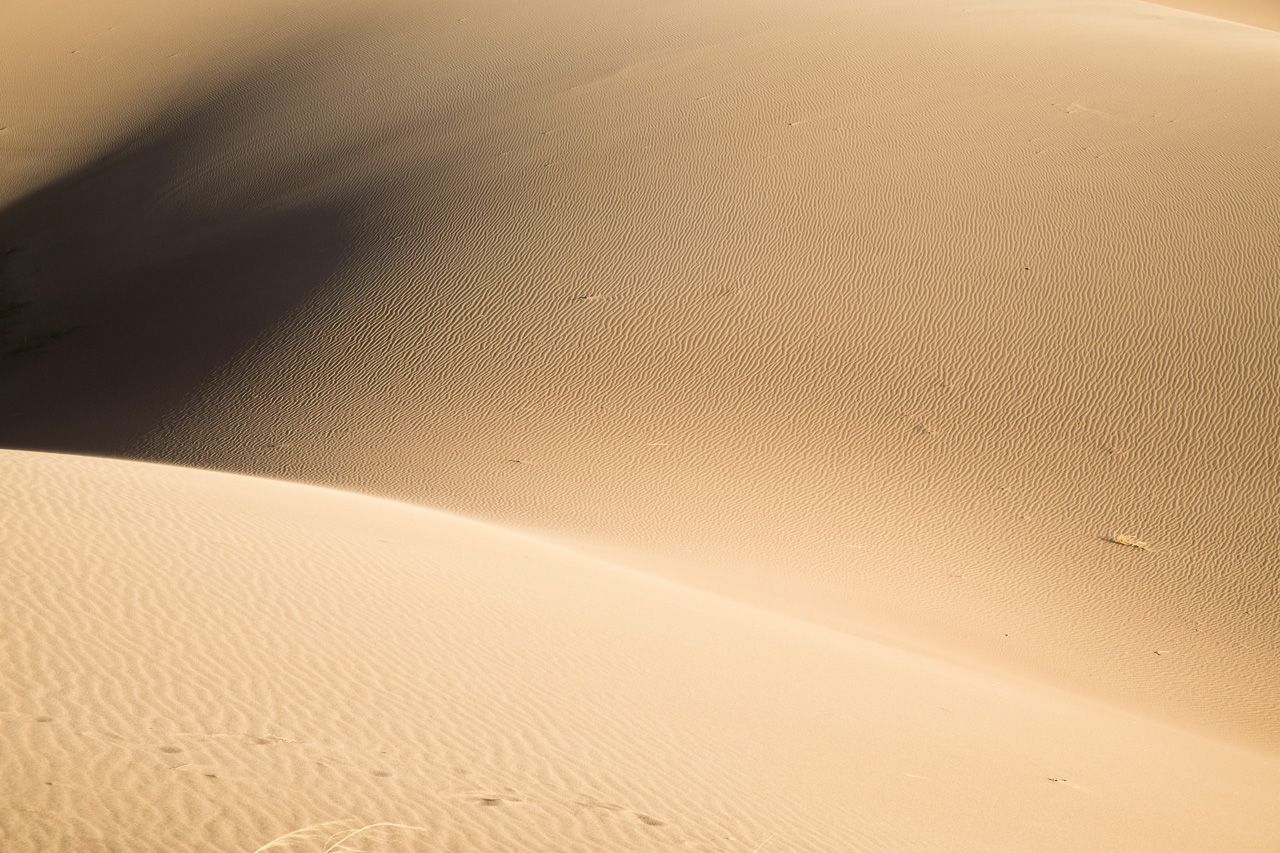
The evening started out grey and cloudy, but slowly changed to a strong golden light that highlighted the textures and patterns in the sand. Fantastic golden light for photography. We planned to stay until dark and try to get some star photos, but it got cold and we left shortly after dark.
It was time to take a few days away from work, so I flew off to the Twin Cities to hang out with Ben, Sam, and Liz instead. Memorial Day weekend seemed like a good time, and I took two days of vacation to make it a 5 day trip in total.
I thought that by the end of May the cold and wet weather would have passed, but I was wrong. The weather was perfect when I arrived, and pretty good when Ben and I went on our nice bike ride, and then dreary and cold the rest of the weekend. We didn’t even make a good effort at Memorial Day grilling; we went and got pho instead. Cold weather food!
But that’s OK. The trip was less about the weather and much more about spending time with friends.
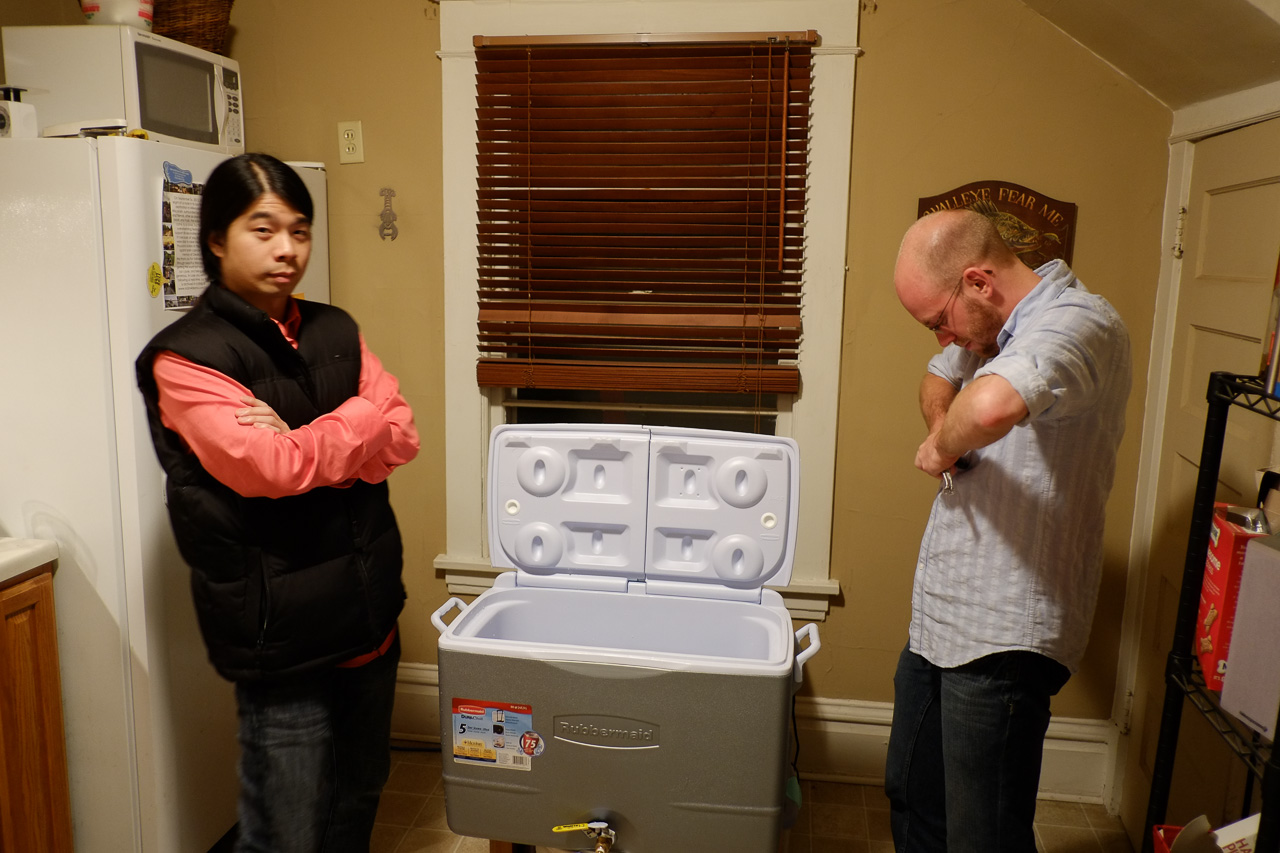
Together we built a mash tun for Ben’s first foray into all-grain brewing, and made a clone of Bell’s Oberon.
We ate delicious Kramarczuk’s sausages, grilled by Ben. We drank several beers, including Ben’s own brew and beers I can’t buy in Colorado. Ben and I visited a couple fairly new tap rooms on our bike ride. We had a semi fancy dinner at the Happy Gnome. We had pizza, and pho, and Liz made us pasta. We drove to Wisconsin for beer and watched episodes of Sherlock.
I got to unwind a bit. But now I’m home and back to work and back to running and trying to work off some of that food and beer.
At least, not by simple “number of ingredients”, “different kinds of malts”, “number of hop additions”, or similar measure.
I was really trying to keep this one simple, straightforward, and good. The kind of beer you can sit down and have a couple and they aren’t palate busting (like a super hoppy IPA) or drunk making (like my 8.5% ABV monster conditioning in the corner).
The beer aims to hit all the high notes of the American Pale Ale style, including smooth hoppiness, nice malt notes, and a rich color. I think it will do that, but the recipe got a little out of hand. 5 kinds of malt, 2 kinds of hops, and 5 total hop additions. Oh well. I’m looking forward to cracking one of these open mid June.
The recipe:
This is an all-grain recipe I developed based on the style notes for an APA, notes from Gordon Strong’s books, and information from Designing Great Beers. It’s supposed to be relatively simple, with a hint of complexity in the malt. This is the first brew I am trying with all late hopping; all hops were added in the last 20 minutes of a 70 minute boil.
I wanted a beer with more color than my last two brews, both of which are extremely pale. To help this I added some crystal malts along with Munich malt. I added wheat for the hell of it, and used rice hulls for the first time to help with mash temperature evenness and easier lautering.
The brewing process went very well, and I actually got a higher starting gravity than planned, indicating good mash efficiency. This will be a simple one stage fermentation, 3–4 weeks and then bottled.